The IICRC in 2025 and Beyond: Growth, Standards, and a Volunteer Spirit Drive the Institute Forward
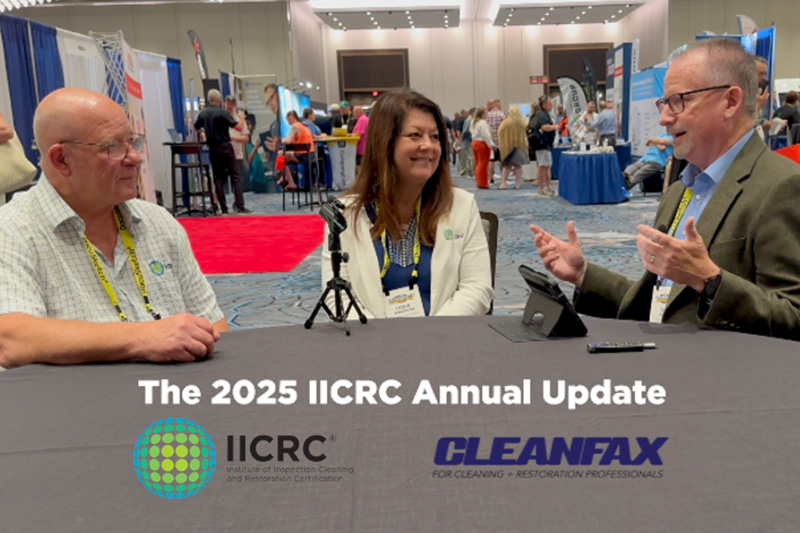
The Institute of Inspection, Cleaning, and Restoration Certification (IICRC) is moving at what Chairman of the Board Leslie Anderson described as “light speed.” From new standards development to updated exams and an expanding international footprint, the institute is showing no signs of slowing down.
A year of momentum
Anderson, who became chairman earlier this year, brought decades of restoration experience to the role. She owned and operated her own restoration company before joining Paul Davis Restoration in 2010, and today she continues to serve the industry as both a leader and an instructor.
Her predecessor Carey Vermeulen echoed the company’s progress.
“When I came into IICRC, there were 4,000 technicians. I was number 4,634,” he said. “Today, those numbers are approaching 50,000 to 60,000 current technicians, and hundreds of thousands have taken courses. Certified firms have also grown. We worked for years to reach 2,000, then 5,000. Now we’re at nearly 8,000.”
Vermeulen not only credited growth in certifications, but also a maturing organizational structure.
“We have fantastic staff—about 35 inside the building—and a tremendous volunteer base,” he said. “When I took over three and a half years ago, we started building standard operating procedures. We’re not quite done yet, it takes that long, but the systems are in place.”
Why it works: Culture and collaboration
When asked about the “secret sauce” behind IICRC’s success, Anderson pointed to the culture of service and mentorship.
“There is a fundamental piece to all of us: I want to help someone, I want to serve someone,” she said. “There’s a cohesive relationship between volunteers and staff that makes it all work.”
Vermeulen agreed, emphasizing the vital role of volunteers.
“Despite the staff, it’s the volunteers who run the IICRC,” he said. “They ensure standards are written correctly, exams are structured properly, and everything is delivered to the industry as promised. Every position is important, and it’s rewarding to be part of that process.”
Standards, government traction, and international reach
Standards and certification remain the backbone of IICRC’s impact. Vermeulen noted the growing influence of IICRC standards on legislation.
“Governments are creating legislation that requires the use of IICRC-certified technicians for mold remediation and to follow the S520 mold standard,” he said. “What we do in homes and buildings impacts both structural integrity and occupant health. That’s why recognition is growing.”
Internationally, IICRC standards have been adopted by Standards Australia, translated into Japanese, and supported in the UK and Europe.
“We’re seeing a large increase in international registrants and certified firms,” Vermeulen said. “The presence of IICRC at international trade shows continues to expand, and the global recognition of our standards is a major milestone.”
Lessons from the pandemic
The pandemic tested the institute’s ability to adapt, and it responded quickly. Within days of lockdowns, IICRC shifted to live-streamed training. While both Anderson and Vermeulen agreed that in-person training is the gold standard, the shift opened doors for those in remote areas.
“I’ve had students on Zoom from Northern Canada, Alaska, even Singapore and Hawaii,” Vermeulen said. “That never would have happened otherwise.”
Anderson, also an instructor, emphasized that virtual learning has value, but that face-to-face interaction remains critical.
“I’m an in-person learner myself,” she said. “But for many, live streaming is the only option. We work hard to make those experiences engaging and effective.”
Inspiring the next generation
Both leaders spoke passionately about encouraging more professionals to get involved.
“It inspires me, the dedication of our volunteers,” Anderson said. “If you can mentor, teach, or guide someone, you’re making the industry better.”
Vermeulen added: “It’s rewarding to see the final product of that effort—the finished standard, the completed exam. We always need more people willing to give their time.”
Looking ahead
Anderson pointed to the release of new standards in 2025 as a key milestone on the horizon. Vermeulen closed with a call to action: “We have many dedicated volunteers, but we always need more. It’s rewarding work, and the Institute will only continue to grow stronger with broader involvement.”
The IICRC’s annual update reveals an organization rooted in volunteer service yet equipped with professional staff, expanding global reach, and a culture of mentorship. From explosive growth in certifications to international recognition of standards, the institute continues to shape the cleaning and restoration industry worldwide.

Jeff Cross
Jeff Cross is the ISSA media director, with publications including Cleanfax, Cleaning & Maintenance Management, and ISSA Today, as well as multimedia programs such as Straight Talk! and Take 5 With Cleanfax in video and podcast format. He can be reached at [email protected].