Inside RIA’s Growing Role in Advocacy and Government Affairs
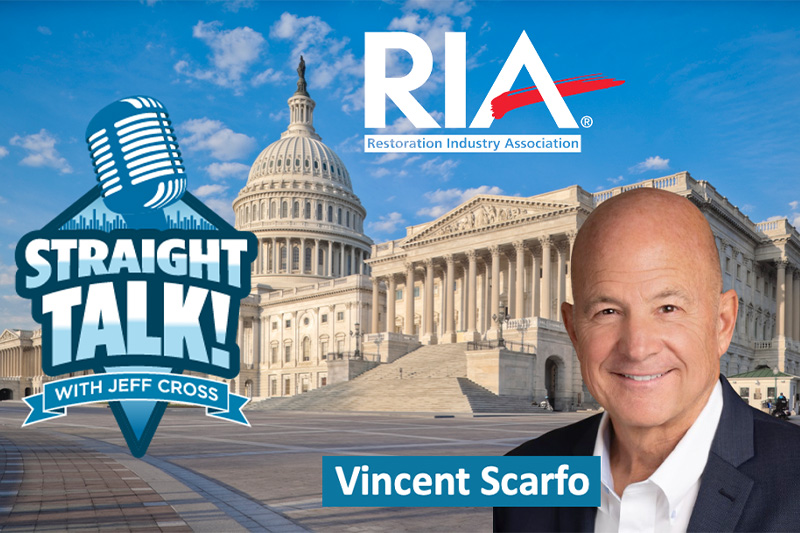
Advocacy and government affairs can seem distant or abstract—until a regulation changes, a workforce issue arises, or a new piece of legislation suddenly impacts how restoration companies operate. That is when the work becomes real.
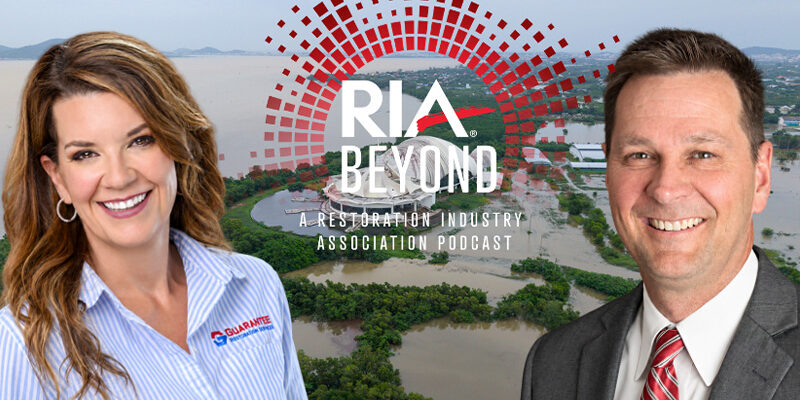
Vince Scarfo, director of advocacy and government affairs with the Restoration Industry Association (RIA), understands that moment well. His role focuses on moving the industry from reacting to policy decisions to helping shape them.
Scarfo took on a new advocacy role at RIA after years of experience in government affairs, policy, and corporate leadership. Recently, he spent five years with an independent restoration company, an experience that changed his views on the industry. Watching teams respond to loss firsthand reinforced what many restorers already know: Restoration is about people first.
“When an event takes place, people are devastated,” Scarfo said. “Being able to put your arm around somebody and say, ‘I got you—we can figure this out,’ that matters.”
That people-first mindset shapes how Scarfo approaches advocacy. He described himself as a servant leader whose role is to listen to RIA members and represent their interests, not work in isolation. His job, he said, begins with asking good questions, listening carefully, and understanding the realities restorers face every day.
While advocacy might seem abstract, Scarfo explained that it is rooted in process. Each morning, he checks monitoring dashboards that highlight proposed legislation nationwide. When specific keywords are detected, he reviews the language and decides whether it should be passed to RIA’s legislative task force. Some bills need reminders about compliance. Others may require a more active approach.
At the same time, Scarfo said advocacy isn’t purely procedural. Creativity and collaboration are vital, mainly as RIA works more closely with other associations and coalitions. By partnering with organizations like ISSA, the association for cleaning and facility solutions, and the Institute of Inspection Cleaning and Restoration Certification (IICRC) and engaging with groups, such as the National Council of Insurance Legislators, RIA is broadening its influence and ensuring restoration has a voice in broader policy discussions.
“There are a lot of groups trying to do the same thing—set standards, elevate ethics, and get bad actors out of the industry,” Scarfo said. “RIA is trying to do the same thing.”
Timing, he said, is everything. Increased natural disasters, evolving insurance processes, and growing legislative interest have created what Scarfo called a “perfect storm.” Restoration is no longer operating behind the curtain. Legislators, insurers, and regulators are asking more questions about who restorers are and how they operate. That makes proactive engagement essential.
One major priority for Scarfo is securing a dedicated North American Industry Classification System (NAICS) code for the restoration industry. The application process only opens once every five years, and RIA leadership submitted its request during the most recent window. Approval would bring significant benefits, including improved industry data, more explicit recognition by federal agencies, and better access to government contracting opportunities.
“If we had that code, we’d be recognized differently,” Scarfo said. “One day, when a natural disaster happens, the restoration industry could be viewed as an emergency response—come on in.”
Scarfo stressed that none of this works without member involvement. He recognized that restorers are busy, often spending long days working in the business rather than on it. His message to contractors is clear: Set aside an hour. For example, visit advocacy pages, stay informed about current issues, and build relationships with local legislators when needed.
“If you know a senator because your kids play soccer together or you attend the same church, that matters,” Scarfo said. “They want to hear from their constituents.”
As RIA expands its grassroots efforts into 2026, Scarfo said opportunities for involvement will increase—from education and alerts to direct outreach when legislation calls for support. The goal isn’t to cross boundaries, but to ensure policymakers understand how restoration work affects real people in their communities.
For Scarfo, advocacy is ultimately about visibility. “We have members in every state,” he said. “We’ve got to protect everyone.”
And that starts with showing up, speaking up, and making sure the restoration industry has a seat at the table.

Jeff Cross
Jeff Cross is the ISSA media director, with publications including Cleanfax, Cleaning & Maintenance Management, and ISSA Today, as well as multimedia programs such as Straight Talk! and Take 5 With Cleanfax in video and podcast format. He can be reached at [email protected].