The Operational Plan
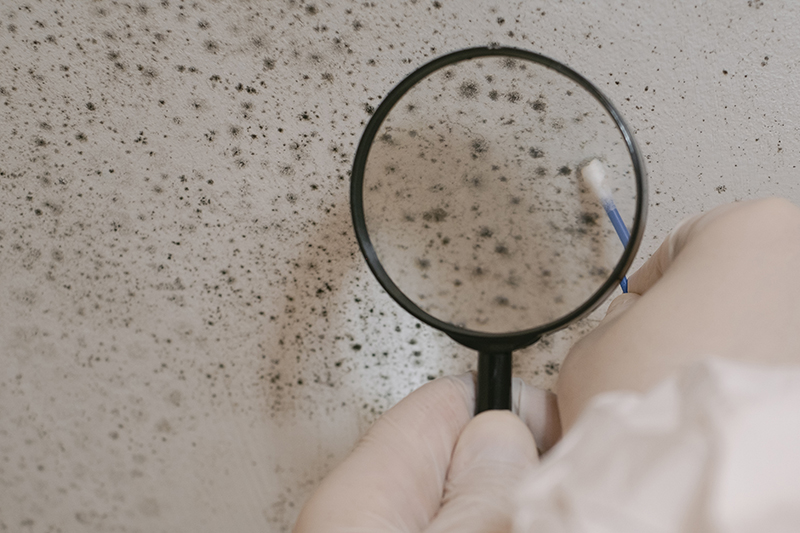
Mold is more than just an unsightly nuisance. It can produce mycotoxins and other biotoxins that affect the health of building occupants, especially those who are sensitized or suffer from biotoxin illnesses such as Chronic Inflammatory Response Syndrome (CIRS).
For indoor environmental professionals, the challenge is leaving behind guesswork and visual inspections. Success comes from blending a clear operational plan, objective laboratory testing, and proven protocols.
Enter a biotoxin assessment kit, an essential tool in the NORMI™ professional’s toolkit. To turn a sampling kit into actionable insight, follow a practical workflow: determine the need for assessment, establish a sampling strategy, conduct laboratory sampling, interpret results, and develop next steps. This process is based on NORMI Professional Practices and the medically sound Level 4 protocol.
Why biotoxin assessment matters
Mold exposure can produce mycotoxins and inflammatory biotoxins that pose serious risks to occupant health. In fact, according to NORMI’s Medical Advisory Board, endotoxins, actinomycetes, and beta-glucans may pose a greater threat than mold.
Traditional visual inspections, swabs, and air sampling sometimes miss hidden contamination left behind after a traditional remediation process. The Level 4 protocol targets unseen contamination that may not be detected by any other means.
In turn, the biotoxin assessment kit provides objective environmental data that supports informed decisions for investigation, sanitization, and remediation. Sampling done as post-remediation verification (PRV) is more holistic and comprehensive. This type of testing is especially critical when occupants report symptoms consistent with biotoxin illness or CIRS, as it helps medical professionals correlate environmental factors.
Understanding the types of biotoxin testing
Environmental Relative Moldiness Index (ERMI) testing examines 36 mold species to gauge overall moldiness in dust samples. Though most often used by non-professionals, the professional assessor determines to utilize more accurate qPCR (quantitative polymerase chain reaction) testing with clearly defined collection techniques.
HERTSMI-2 (Health Effects Roster of Type-Specific Formers of Mycotoxins and Inflammagens–Version 2) is a DNA-based dust test that focuses on five mold species and measures specific mold species commonly associated with water-damaged buildings. It helps assess the relative mold burden in an indoor environment and provides guidance on whether conditions may pose a risk for individuals with mold sensitivity or chronic inflammatory response illnesses.
Dust DNA testing (qPCR-based) identifies mold species and concentrations by analyzing dust DNA rather than just airborne spores, providing a longer-term contamination profile.
Endotoxin and actinomycetes surface sampling involves collecting samples from building materials or settled dust to identify the presence of bacterial byproducts associated with water damage and microbial growth. This testing helps evaluate potential exposure to microbial contaminants that may contribute to respiratory irritation, inflammation, or other health concerns in indoor environments.
Each test type has different operational implications for sampling, laboratory analysis, and interpretation. So, by taking a variety of tests, the NORMI professional can gain a clearer picture of indoor air and surface quality.
When to use a biotoxin assessment kit
Traditional mold sampling may help indicate a current problem. Still, biotoxin testing tends to reveal what might have been a long-term problem or residual left from a poorly executed sanitization or remediation process. Because it gives a broader view of the environment, it is best applied when:
- Occupants are experiencing unexplained health symptoms that may be linked to mold or biotoxins— They may experience those problems when in that environment, but seem to improve when they leave it.
- Post-remediation verification (PRV) to confirm mold reduction and biotoxin clearance—Traditional cleaning methods may leave residue that only small-particle cleaning can eliminate.
- Following water intrusion events, flooding, or leaks that raise mold growth risk—As part of the initial assessment, the professional will have a better understanding of the damage that may have been done to the indoor air quality (IAQ).
- During real estate transactions or building due diligence—This is when a potential occupant needs to evaluate the building’s condition.
- When visual or air sampling inspections do not explain occupant complaints—Because biotoxins can persist in the biofilm, which is often left behind when visible mold is mechanically removed, biotoxin testing is the only way to effectively prove that the surface is clean.
- To support clinical investigations of biotoxin illness with environmental data—Many doctors are now learning how to connect environmental biotoxins to symptoms a patient might experience while in that environment. This can produce invaluable information when investigating a patient’s health.
Preparing the property for sampling
Before collecting samples, prepare the environment to ensure reliable results:
- Confirm that no recent deep cleaning or dust removal would skew findings. This is often difficult to request but imperative to get the best results. An assessment professional wants to create a profile based on the way a person lives in the environment, not on how effective the cleaning process is.
- Allow normal dust accumulation—sampling after cleaning can lead to false negatives.
- Identify representative sampling locations across the indoor environment to detect any systemic issues. This would include:
- Areas with known or suspected water damage history.
- Heating, ventilation, and air conditioning (HVAC) supply and return vents that influence air distribution.
- Occupied spaces with frequent occupant activity.
- General living areas and moisture-prone areas like bathrooms and laundry.
- Document each sampling location with photos and notes to maintain chain-of-custody integrity.
Sample collection procedures
Following the NORMI Sampling Interpretation Chart, the biotoxin assessment kit enables the professional to evaluate for contaminants and compare them to what is considered “normal/expected” ranges and aligned with NORMI protocols:
- Air sampling is completed using a pump that collects 75 liters of air (15 liters per minute for 5 minutes). Once sent to the laboratory, mold spores will be counted and extrapolated to a cubic meter of air and compared to the Sampling Interpretation Chart for interpretation.
- Tape lift samples where visible mold may be present. Tape lift samples are taken to evaluate the non-viable level of mold via direct read microscopy.
- Swab samples collect dust from horizontal surfaces, such as bookcases, door jambs, and areas above cabinets. The laboratory may culture them to determine the level of potential contamination on surfaces. Like reading the rings of a tree, this often indicates a history of the IAQ and establishes a baseline to which post-cleaning can be compared.
- Enthalpy total volatile organic compounds/microbial volatile organic compounds (TVOC/mVOC) sampling pumps may detect that molds are actively growing in the environment, even if no visible evidence exists. The test also includes TVOCs from personal care products, cleaning solvents, and other chemicals that could contribute to overall poor air quality.
- HERTSMI-2, actinomycetes detection, and endotoxin qPCR testing are some of the most advanced tests in the industry. Identifying these contaminants on surfaces will help the professional write a sanitization or remediation protocol that addresses them at the microscopic level. Traditional cleaning is often inadequate to address this biofilm.
- A luminometer is a useful device to assess the cleanliness of any surface by measuring adenosine triphosphate (ATP), nature’s energy source for all living organisms. Though it does not identify the specific organism, it indicates whether the surface is clean and may help the professional determine which other type of diagnostic tests might be needed.
- A general hygrometer and moisture meter is a starter tool that measures temperature, relative humidity, and moisture in surfaces. It includes both a pinned and pinless moisture meter to assist the professional in finding a water source that may be contributing to visible mold growth.
- A particle counter logging in real time the particles of both 0.5 micrometer and 2.5 micrometer is critical to identifying air infiltration issues and elevated particulate counts from animal dander, pollen, mold spores, insect parts, and other contaminants we call “dust.”
Once the samples have been collected and labeled clearly with location, date, and the collector’s name, the professional will complete the appropriate chain-of-custody documentation.
Laboratory analysis and interpretation
After submission to a certified laboratory, the lab performs detailed analysis. Many labs now specialize in their services, requiring that different labs be used for distinct types of samples. These objective diagnostics are then used to substantiate the occupants’ subjective suspicions and to help the professional draw conclusions about which protocol should be used to address any issues.
Lab samples should not be used as the only diagnostic tool. Still, they are invaluable for substantiating a professional’s subjective conclusion about the project based on his visual investigation. These objective diagnostics serve as the baseline for post-remediation testing at the end of the project.
Interpretation of the results is critical and requires understanding building science, mold ecology, and occupant sensitivity. With assistance from the NORMI Medical Advisory Board, headed by Dr. Andrew Heyman, guidelines have been established for determining what might be considered “normal/expected” ranges of contaminants. Of course, because we are dealing with indoor environments, contamination levels are not determined based on outside comparisons but by the NORMI Sampling Interpretation Chart.
Limitations of biotoxin testing
Operationally, it’s important to recognize what biotoxin testing can and cannot do:
- It does not necessarily locate the mold source; physical inspection and moisture mapping are required. Thermal imaging can also help direct the assessor to areas of the home where moisture intrusion or air infiltration is a contributing factor.
- Results must be combined with building science assessments and HVAC evaluations. All too often, oversized or undersized HVAC systems contribute to excessive moisture in the environment.
- Testing is one component of a comprehensive indoor environmental assessment, not a standalone diagnostic tool.
- False negatives or positives are possible if sampling or analysis protocols are not strictly followed. A well-trained professional can avoid these miscalculations by utilizing the standardized processes outlined in the NORMI Professional Practices.
Converting results into an action plan
Results from the interpretation of the assessment diagnostics should always include a solution. The solution may require a remediation protocol that includes the removal of contaminated construction materials, in accordance with the ANSI/IICRC S520 Standard for Professional Mold Remediation. The purpose of remediation is to identify and repair the moisture causes associated with the visible mold contamination.
In situations where mold or microbial contamination is not visible, levels may still be elevated and would require the sanitization protocol. As outlined in the NORMI Professional Practices, the sanitization protocol is designed to lower contamination levels to “normal/expected” ranges.
Using biotoxin testing as a verification tool
Biotoxin assessment kits are invaluable for quality assurance when performing the PRV or clearance testing. Once the baseline has been established, using the same type of testing on the back end of the project helps confirm that the protocol has been followed and that mold and biotoxin contamination have been reduced.
The biotoxin assessment kit is also used to monitor how the environment is used following the project by periodically providing the same type of testing. Tracking building performance ensures IAQ continues to remain the best possible, creating a cleaner, safer, and healthier indoor environment.

Doug Hoffman
Doug Hoffman is the founder and Executive Director of the National Organization of Remediators and Microbial Inspectors (www.normi.org), a not-for-profit training and certification organization for IAQ professionals. His passion has been helping people understand how to live healthier lives indoors and empowering them with the ability to have clean air. Get more information from his book, Mold-Free Construction, at www.moldfreeconstruction.com.
Doug can be reached via e-mail at [email protected].