When a Cleaning Job Becomes a Restoration Job: A Field Guide to Spotting Hidden Water and Mold
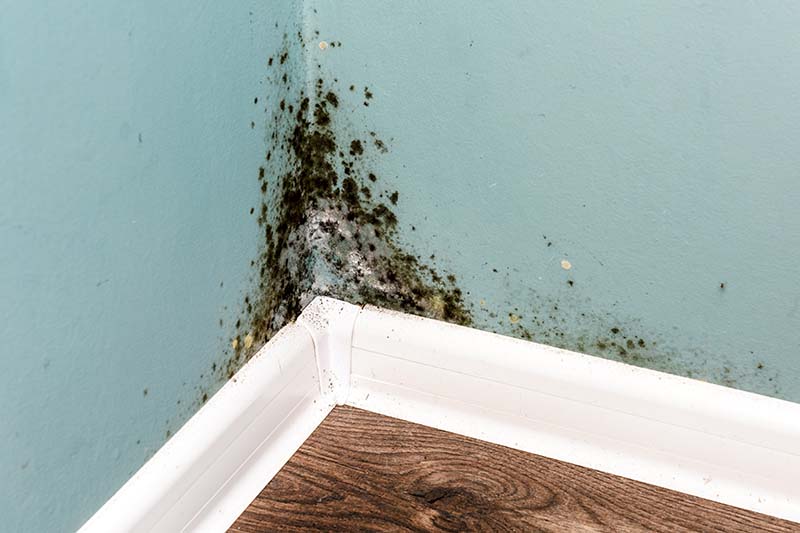
For a cleaning or facility crew, water is part of the job. The trouble starts when a routine task is quietly something bigger: a slow supply-line drip behind a cabinet, a chronic damp spot in a janitorial closet, a carpet still wicking moisture up the baseboard a day after a spill was wiped up.
Handled as cleaning, those grow into structural and health problems. Caught early for what they are, which is what we focus on at Apex Restoration, they stay small and cheap. Cleaning teams are the right people to catch them, because they are in the building daily, in the corners and under the fixtures, where nobody else checks. What follows is a field guide to that line: the signs worth stopping for, what the restoration standards say, and the point at which a cleaning job has become a restoration job.
Reading the signs of water damage
A single dry, already-cleaned stain is one thing. The signs of water damage that should make you stop and reassess are the ones that are active, recurring, or spreading:
- Staining with a history: brown rings, a darkened ceiling tile, tideline marks on drywall or baseboard. Water has been there, and the shape hints at how much and how often.
- A musty, earthy smell, which is microbial activity announcing itself before any mold is visible.
- Soft or cool surfaces: spongy flooring, drywall that gives under light thumb pressure, a baseboard that has started to swell.
- Finish failures: peeling paint, bubbling vinyl, cupping or crowning wood, or efflorescence, the white crust left when water moves through concrete or masonry.
- Recurring condensation on windows, cold pipes, or exterior walls.
Where you find these matters as much as what they are. The usual hiding places are under sinks, behind and beneath cabinets, around water heaters, at HVAC units and condensate drain pans, along window perimeters, and on below-grade walls.
What the standards say
The restoration industry does not guess at this. It works from published consensus standards, principally the ANSI/IICRC S500 for water damage and S520 for mold. Two ideas from those documents are worth carrying on every cleaning route.
The first is the water category. The S500 classifies water damage into three categories based on contamination. Category 1 is clean, from a broken supply line or a left-on faucet. Category 2, often called gray water, carries enough contamination to cause illness: a washing-machine discharge, a dishwasher overflow. Category 3, black water, is grossly contaminated and includes sewage, ground-surface flooding, and water that has sat long enough to degrade. Mopping a Category 2 or 3 event with disinfectant is ineffective and poses a real exposure risk to the person doing it. And a clean Category 1 leak does not stay Category 1; it degrades the longer it sits.
The second is the clock, and it settles a question every building manager eventually asks: how long does it take for mold to grow? Under typical indoor conditions, mold can begin to grow on damp materials within 24 to 48 hours; the Environmental Protection Agency advises drying any water-damaged area within that same window to keep mold from taking hold. That short stretch of time is the whole reason “we will get to it on the next visit” is the wrong answer for anything actively wet. The response that matters is fast, verified by a meter rather than judged by how a surface looks or feels.
When it is no longer a cleaning job
Treat the situation as a restoration call, not a cleaning task, when any of the following is true:
- The water is Category 2 or 3, or you cannot confirm the source is clean.
- Moisture has reached porous or built-up assemblies: drywall, insulation, carpet pad, cabinetry, or subfloor, where it cannot simply be wiped away.
- There is visible mold beyond a small surface patch, or a strong musty odor with no source you can see.
- The wet area is larger than a minor spill, or the source is still running.
- Anyone in the space reports irritation, or the building serves a sensitive population such as a hospital, school, or senior-living facility.
In those cases, the right move is to contain the area and bring in a firm to assess the moisture and document what it finds. Surface-cleaning a wet assembly traps moisture behind a clean-looking face, masks the odor for a day, and sets up the callback.
What restoration adds
A restoration response handles the part that a cleaning visit is not equipped to manage. It locates and stops the moisture source, measures moisture inside materials with meters and sometimes thermal imaging rather than reading the surface, contains the area so spores are not carried through the building on foot traffic and HVAC, removes unsalvageable porous materials under the S520 framework, and dries the structure to a documented standard instead of an impression. It also leaves a record, which protects the building owner and their insurer, and protects the cleaning contractor, who, more often than anyone gives them credit for, is the one who caught the problem first.
Treat moisture as a scope boundary
None of this asks cleaning teams to fear water. It asks them to treat moisture the way they already treat a live electrical hazard or a material that might contain asbestos: as a recognized line where the right move is to stop, flag, and call the specialist. Know the signs, know the three water categories, respect the 24-to-48-hour window, and know who to call. The cleaner who flags a hidden leak in time is not handing off a job. They are doing the single most valuable thing anyone in that building can do for it.

Nate Birch
Nate Birch is CEO of Apex Restoration, an IICRC-certified water damage restoration and mold remediation firm in Idaho and Eastern Washington. He has spent six years responding to residential and commercial property losses alongside carriers and adjusters. Visit his website at apexrestoration.com.