CDC Report Offers Evidence of Invasive Mold Disease
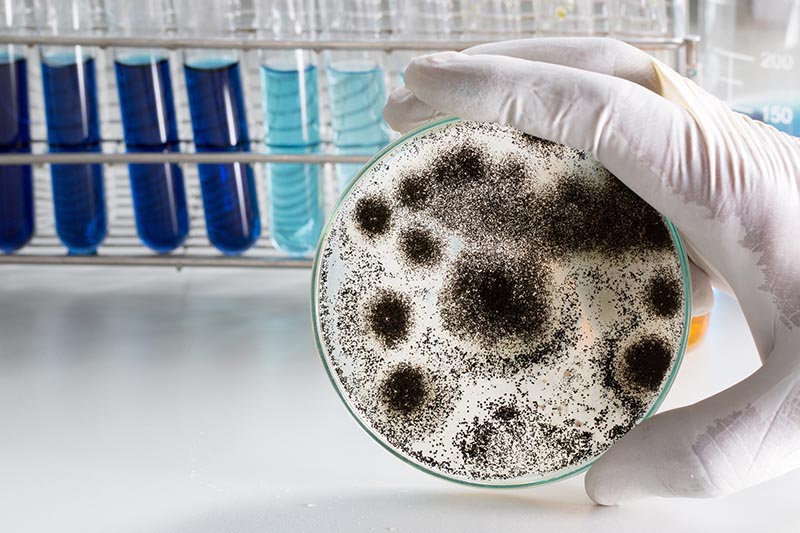
A Centers for Disease Report and Prevention (CDC) report published today answers the question: Does a positive mold test mean someone’s actually sick?
The answer to that question is: not necessarily. To determine the answer, the CDC detailed active surveillance on invasive mold diseases (IMDs): rare, life-threatening infections that primarily affect persons with immunocompromising conditions. The most common molds associated with IMDs are Aspergillus spp., Mucorales (e.g., Mucor spp., Rhizomucor spp., and Rhizopus spp.), Fusarium spp., and Scedosporium spp. IMDs can affect the lungs, sinuses, skin, central nervous system, or multiple body sites.
The study tracked 968 patients across four Atlanta hospitals (2020–2024) with a positive mold culture or Aspergillus spp. test. Among the confirmed patients with IMD, the largest percentage were aged 45–64 years (43%), followed by older than 65 years (39%), and 19–44 years (18%). Patients aged 1–18 years and under 1 year each accounted for less than 1% of IMD cases. Pulmonary infections were most common (68%), followed by cutaneous or deep tissue (nonfacial) infections (11%), sinus or nasal infections (10%), and central nervous system infections (excluding eyes) (9%). Less frequent sites of infection included soft tissue (2%), blood (1%), bone (1%), and eye (1%).
Key takeaways:
- Only 46% of positive results were true invasive disease. A positive finding is not the same as a health outcome. It is a signal, not a diagnosis.
- Infection sites tracked with mold genus Aspergillus, Scedosporium spp., and Curvularia spp. were most associated with pulmonary infections. Mucorales genera were more commonly associated with sinus, nasal, or facial infections and Fusarium spp. with cutaneous or deep tissue infections.
- 35% of confirmed cases had no classic risk factors, underscoring the need for clinicians and surveillance efforts to consider the possibility of IMDs among patients without classic host risk factors for infection.
- Severity was high: 43% of patients with IMD were admitted to a hospital intensive care unit (ICU), and 50% of patients with IMD required intubation and mechanical ventilation. The 90-day mortality was 45%.
“This CDC report does strengthen the evidence base we can point to when explaining urgency, scope, and risk to building owners, facility managers, and healthcare clients,” said Dr. Gavin Macgregor-Skinner, senior director of the Making Safer Choices program at ISSA, The Association for Cleaning & Facility Solutions. “It has real implications for how we assess and communicate risk in water-damaged buildings.

Cleanfax Staff
Cleanfax provides cleaning and restoration professionals with information designed to help them manage and grow their businesses. https://cleanfax.com/