The New Era of Polyester and Triexta
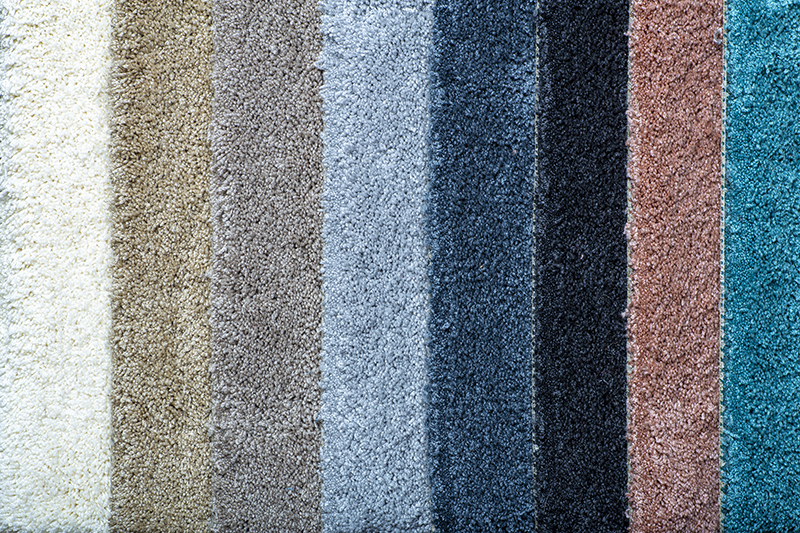
Do you remember when nylon dominated residential carpet? Nylon delivered excellent resiliency, maintained its crimp for a full plush appearance, and resisted apparent soiling because the polymer tolerated abrasion far better than other synthetics. In contrast, polyester (polyethylene terephthalate or PET) and later triexta (polytrimethylene terephthalate or PTT) often appeared to lose their aesthetic appeal quickly. After a year, nylon still looked full, while polyester frequently looked flat and lifeless.
Today, that comparison is no longer as clear. Both PET and PTT have undergone significant improvements. It is worth remembering that nylon itself required multiple generations of development before reaching its current performance level.
Fiber design
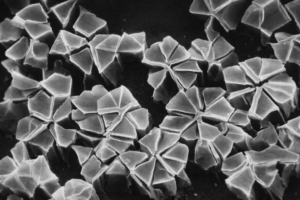
Scanning electron microscope view of multi-lobal polyester filaments. The lobed shapes increase rigidity and resilience, while the higher filament count creates denser coverage and improved soil-hiding properties.
Polyester (PET): Earlier generations of nylons created bulk primarily through crimping, which the fiber could hold effectively. Polyester (PET), by contrast, does not retain crimp as readily, a characteristic long recognized in textile applications, where polyester garments resist wrinkling. As a result, modern polyester constructions rely more heavily on modified cross sections to create and maintain bulk. These shapes, often multi-lobal in design, provide structural support within the yarn, while higher filament counts improve coverage and visual fullness for resilience.
Triexta (PTT): By contrast, triexta gains resiliency from its chemistry. Its three-carbon glycol backbone forms a zigzag molecular structure that provides inherent elastic recovery. This gives triexta a spring-like behavior that earlier polyester fibers lacked.
Density changes maintenance
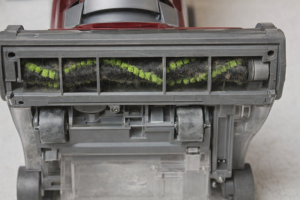
Aggressive beater bar on a vacuum head. When set too low on dense, soft polyester or triexta, the rotating brushes can damage fine filaments rather than lifting embedded soil.
Routine maintenance needs to be modified for PET and PTT. Their fine denier and high-filament density create the soft feel customers want, but they also restrict airflow through the pile. Modern fine-denier constructions multiply the total fiber surface area by roughly two to four times compared with older polyester yarns. This gives oily soils dramatically more surface area to adsorb and stick to, while the high-density packing makes deeply embedded soil much harder to reach.
Standard vacuum heads may seal against the surface or fail to generate enough suction to remove embedded soil. Aggressive beater bars set too low can damage fine filaments rather than lift debris. Even specialized soft-bristle or vented heads, while gentler, often lack the lift needed to remove deeply embedded particulate. Only dry compound systems using counter-rotating brush agitation combined with stronger
vacuums appear to provide the proper mechanical action and
sufficient airflow to reach deep into these dense piles.
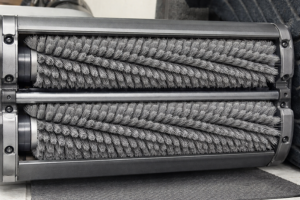
Close-up of the dual counter-rotating brushes. These brushes work preconditioning agents deep into high-density polyester and triexta piles to suspend embedded soil.
Density & professional cleaning
Agitation: Because of this density and the increased reliance on stronger emulsifiers for oleophilic soils, effective cleaning now depends far more on mechanical agitation than in the past. Chemistry alone is not enough. Those cleaning agents must be worked to the base of the yarn bundle to reach and release adsorbed oils. Counter-rotating brush (CRB) systems have become a practical necessity. They distribute preconditioning agents evenly and reach the base of dense yarn bundles. Mohawk Industries explicitly recommends CRB agitation for triexta, and IICRC S100 emphasizes thorough soil suspension prior to extraction. Without proper agitation, cleaning is largely superficial.
Dissolving vs. absorption
Even after proper agitation has suspended the soil, the technician must still address a critical limitation of polyester and triexta: their tendency to absorb oils. Surfactants only work on surface oils through emulsification. However, oils that have been absorbed into the fiber itself require a different approach.
Only two effective ways to remove these oils exist:
- Dissolving using solvents.
- Absorption using a more oleophilic medium.
Without sufficient dissolving or absorption, we have only cleaned the adsorbed or surface soils. The real problem with PET and PTT is the oil absorbed within the fibers themselves.
Many presprays designed for hot-water extraction contain semi-polar solvents that dissolve oils, allowing them to be rinsed away. This method is highly effective, particularly when oils have had a prolonged time to absorb into the fiber. However, these formulations introduce volatile organic compound (VOC) considerations. In environments such as restaurants, Leadership in Energy and Environmental Design (LEED) compliant facilities, healthcare settings, or homes with chemically sensitive occupants, solvent-based approaches may be restricted or undesirable.
An alternative approach is to use dry compound extraction with an oleophilic absorbent. The cleaning compound has a stronger attraction to oils than the fiber itself, and transfers absorbed oils from the fiber into the cleaning media. This process avoids VOC concerns while still addressing one of the most difficult challenges in PET and PTT cleaning.
Preventing wicking: Because PET and PTT are hydrophobic fibers, they are more prone to wicking than hydrophilic fibers (like nylon). This is especially common in heavily soiled, short-pile level loops. Absorbent compound extraction effectively prevents this by using low-moisture media that “trap” soil rather than allowing it to travel to the surface during evaporation.
Practical strategies
The current generation of polyester and triexta is not the material it once was. These are engineered fibers that respond well to proper cleaning.
Successful maintenance now depends on four key elements:
- Proper chemical selection for absorbed oleophilic soils.
- Thorough but gentle mechanical agitation that reaches deep without damaging the fine filaments.
- Controlled extraction of cleaning products.
- Rapid drying.
When these steps are followed, the traditional issues of rapid resoiling and matting can be significantly reduced.

James "Jim" Smith
James “Jim” B. Smith is an IICRC-approved instructor and a senior practicing inspector. His educational studies come from Texas A&M University and the University of Houston. He has been in the cleaning industry since 1975. For more information, call him at 972-334-0533, visit his website at carpetinspector.com/jbs or email him at [email protected].