Understanding Wool and Dyes
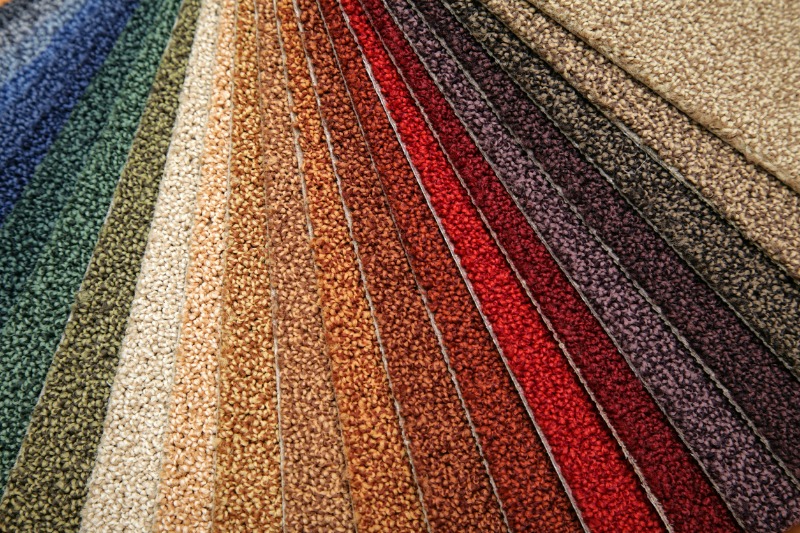
As nylon’s popularity has declined, natural fibers—especially wool—have gained a larger market share. However, replacing a wool carpet due to color loss can be costly, and wool presents more dye-related challenges than synthetics.
Wool vs. nylon: Key comparisons
Both wool and nylon are polar fibers, meaning they possess both positive and negative charges. Wool is classified as anionic, while nylon is cationic, making them chemical opposites. A fundamental principle to understand is that opposites either attract or chemically react, while like charges repel each other.
Wool and nylon are often dyed using anionic (acid) dyes. But their dyeing processes differ:
- Nylon bonds with anionic dyes due to their opposite charges.
- Wool and anionic dye have the same charge, but an acidic finish (typically pH 4.0–5.5) changes wool’s polarity to ensure colorfastness.
Using a nylon-formulated detergent on wool can strip its finish, leading to color loss.
Understanding ionization (pH)
The WoolSafe® Organization is an independent testing and accreditation body that certifies cleaning products for use on wool and wool-blend carpet. Originally part of Wools of New Zealand, it is now a British-based organization that ensures the safe treatment of wool carpet. They have written two standards on wool: WS1000 and WS2000.
pH is often mistakenly understood as THE measure of acids and alkalines, but it is actually one aspect of ionization. A second critical aspect is buffering, which determines the strength of a pH level.
For example, years ago, WoolSafe approved an extraction detergent with a pH of 13.5. When diluted, it had a pH in the high elevens. At the same time, other pH 6.5 products were rejected because they were too alkaline for wool.
Below is an excerpt and chart from the WoolSafe WS1000 standard, explaining how different dye types interact with pH conditions:
“4.2.1 shows the product categories which might be chosen and the pH conditions under which they are usually applied.
Table 4.2.1 Dyes applied to wool carpet yarns from an acid dyebath.
| Dyestuff type | pH range |
| Acid dyes level dyeing | 2.5 3.5 |
| Acid dyes fast | 4.5 5.5 |
| Acid dyes milling | 5.5 6.5 |
| Metal complex dyes | 4.0 5.5 |
| Reactive dyes | 5.0 6.0 |
Level dyeing acid dyes are relatively cheap and have bright colors and good levelling characteristics. Their wet fastness characteristics are only moderate, however. They are used primarily in hank and piece dyeing.
Fast dyeing acid dyes have better wet fastness but are somewhat more expensive and do not level so easily. They are used in printing and for continuous dyeing in open width. (Levelling is a term which relates to the evenness of strike that may be obtained during dyeing. As we have seen earlier, in shade sensitive carpet such as plains and semi-plains any unevenness in the dyeing will be highly visible in the finished product).
Acid milling dyes have an excellent all-round fastness but poor levelling characteristics. As such, they are used for stock dyeing and printing.
Metal complex dyes, including chrome dyes, have extremely good dye fastness. However, they are usually only available in dull or dark shades, and there is increasing concern from environmentalists about the effluent created by their use, since there is a tendency for heavy metals to be discharged with the spent dye liquor.
Reactive dyes are brightly colored with excellent fastness properties but are not commonly used for carpet yarns because of their expense.”
Isoionic points and pH sensitivity
Wool changes its polarity at a pH of 5.5 because that is its isoionic point, the pH level at which the fiber switches its charge. As mentioned earlier, polar fibers have both a positive and a negative end, but one end reacts more easily than the other. Lowering the pH of the liquid surrounding the fiber helps the dye bond more effectively, even if the dye and fiber would normally repel each other.
Here are some key isoionic points for different fibers:
- Wool: pH 5.5 – Wool can be dyed with anionic dyes when its pH is between 2.5 and 5.5. If the pH rises above 5.9, color loss is more likely to occur.
- Silk: pH 4.5 – Wet cleaning silk is risky because it reacts easily with various substances. (This topic deserves a separate discussion.)
- Nylon: pH 1.8 – At this level, nylon changes from cationic to anionic, allowing it to bond with cationic (base) dyes. Some multicolored nylons are made from a mix of cationic and anionic fibers, dyed under pressure in Beck dye machines using both anionic and cationic dyes. These blends are more prone to bleeding during cleaning.
Why is this important?
- Some wool carpet lacks an acidic finish, making it prone to dye bleeding even with exposure to plain water.
- Historically, some chemical manufacturers formulated wool detergents at pH 6.5, inadvertently causing dye bleeding by shifting the wool above its isoionic point.
Identify dye stability in wool carpet
How can you determine if a wool carpet has lost its acidic finish or has been cleaned with the wrong detergent?
It’s simpler than you might think. According to the WS1000 standard: “The finished wool carpet will be acidic in pH, often in the range of pH 4 – 5.5.”
In order to accurately test pH, use a digital pH meter, not litmus paper. Why?
- Digital meters are more precise and cost-effective.
- Litmus paper can bleed onto carpet, contaminating the sample.
- Colorfast pH strips require multiple tests for reliable readings.
By investing in a digital pH meter, you can identify defective wool carpet, detect previous improper cleaning methods, and even spot unusual nylons. Measuring the pH of the face yarn before cleaning ensures proper maintenance and preserves the integrity of the wool carpet.
Your insight will help maintain your wool carpet
Understanding wool’s dye chemistry and pH sensitivity is crucial for preserving colorfastness and preventing costly replacements. By using WoolSafe-certified products and proper pH testing, you can help maintain the beauty and durability of wool carpet.

James "Jim" Smith
James “Jim” B. Smith is an IICRC-approved instructor and a senior practicing inspector. His educational studies come from Texas A&M University and the University of Houston. He has been in the cleaning industry since 1975. For more information, call him at 972-334-0533, visit his website at carpetinspector.com/jbs or email him at [email protected].