
Preparing for Tomorrow: Is the Restoration Industry Equipped to Tackle Biohazard Threats?
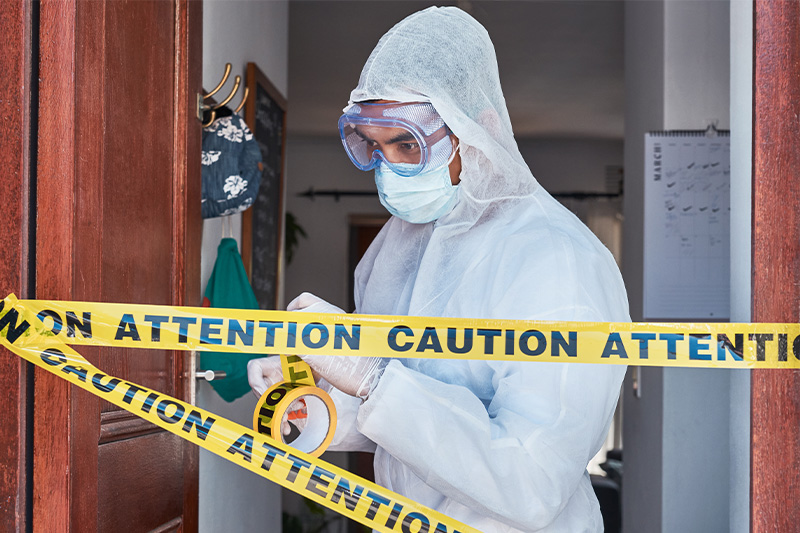
The restoration and cleaning industry is experiencing infectious, chemical, and trauma-related hazards at a scale for which few industries or local responders are fully prepared.
Norris Gearhart, executive vice president regulatory business practice at First Onsite Property Restoration, sees the increasing convergence of biohazards facing the restoration industry and believes the industry needs to be better prepared. As a seasoned leader in biothreat remediation and cleanup, he understands the challenges posed by emerging biohazards, such as fentanyl, and the importance of updated training and protocols.
At First Onsite, Gearhart oversees its regulatory business practices, including indoor air quality, HVAC, asbestos, lead, biohazard, and environmental cleanup, as well as its life sciences division, which handles research facilities and specialty cleaning. He also oversees First Onsite’s in-house training academy to ensure consistency and best practices across its branches.
Emerging biohazard threats
With Gearhart’s extensive background, he believes climate change, driven by extreme weather events, delivers ideal conditions for historic and emerging biohazards. He explained unsanitary conditions after extreme weather events generate cholera and dysentery and spread emerging global biothreats.
“As we continue to make the world smaller and encroach on the natural habitat of other critters that inhabit this space, we become much more exposed to pathogens that weren’t something we were accustomed to seeing,” Gearhart said.
Additionally, re-emerging infections like the measles are also on the horizon. “With misinformation, the fears, and concerns, many of these diseases that have been pretty much written off in the last couple of generations and people aren’t familiar with are now making a comeback,” Gearhart explained.
The industry also is dealing with some significant mental health issues. While restoration professionals may be wondering how mental health affects their businesses, Gearhart explained that mental health adds another layer to all those challenges.
“Everything from malicious things that are done by folks who aren’t necessarily mentally well to the way things are handled and perceptions,” are impacting the industry, he said.
The large senior population also often has a compromised immune system, making it much more susceptible to diseases and other hazards, Gearhart added.
Working smarter
Gearhart offered that the most significant thing the industry can do to handle all these biohazard challenges is to educate itself.
“We’ve really got to understand what those risks are,” he said.
“…We use disinfectants and sanitizers every day on almost every project in our industry. Yet, ask anyone who’s applying those very basic questions about the active ingredients in the product, about what the log reduction might be on the product, about whether or not that product will work on gram-positive or gram-negative bacteria or enveloped or non-enveloped viruses, and there are no answers. Or what is the dwell time requirement on that? How can it be applied?”
Team members often look puzzled by the questions, while Gearhart cautions that these are products they use daily on equipment and on clients’ property. Teams also need to know what they are using for their own health and safety.
“We do not read and/or understand what is on the label and apply it properly,” he said. “… It’s incumbent on us as professions to understand products that we’re using and tools that we’re using and how to use them appropriately.”
In addition to washing hands diligently, Gearhart encourages the industry to get properly vaccinated.
“Under OSHA, we’re required to give our staff the opportunity to be vaccinated with Hep B [Hepatitis B],” Gearhart explained. “And by law, if they turn it down, then we have that letter of declination in their file. The reality is that Hep B and blood, the bulk of our folks aren’t going to be exposed to that in a very regular, high-risk basis. But there’s a vaccination for Hepatitis A. Now, where does hepatitis A show up? In feces.”
Gearhart explained that employees are more likely to encounter dog feces, sewage backups, and drain water that could expose them to Hepatitis A. Yet, employees have very little awareness of, or take slight advantage of, being vaccinated against Hepatitis A.
“We’ve got to do a better job of accepting the responsibility, understanding what the risks are from a health and safety standpoint,” he said, adding that the risks need to be assessed from an insurance, licensing, and liability standpoint.
Fentanyl
Lately, fentanyl related cleanups have overwhelmed responders who lack specialized training. First Onsite handles a significant amount of fentanyl cleanup across the country, with in-house capabilities at some locations and partnering with companies in other regions.
“The fentanyl risk is real and serious,” Gearhart said. “At the same time, it can be a little overblown, and how do you walk that line?”
Professionals need appropriate protocols, buddy systems, and basic PPE. The most significant areas First Onsite struggles with are finding certified industrial hygienists who have the knowledge, capability, and willingness to conduct the initial survey to help create the protocol for the company to execute, and then to perform the follow-up clearance testing.
Even when hygienists are available, local labs for testing validation of the samples might not be nearby and may be behind by weeks. Gearhart explained the space can be denied for that waiting period. But in most cases, building owners, from an economic standpoint, do not want to wait. Restoration professionals must then assume the worst, and the building owner incurs that expense.
Another challenging aspect of fentanyl cleanup is consumer education.
“The consumer figures a cleanup is a cleanup, and anyone can do the cleanup,” Gearhart explained. For example, a cleaning service might quote a customer one price for an unintended death with fentanyl, and your cost might be more. The customer might believe your business is trying to rip them off rather than understanding the risks of death and liability.
“And sadly, there are plenty of those folks who will still come in there and do [the cleanup] because they don’t know any better,” Gearhart said.
Consumer education
Gearhart gives credit to restoration professionals who are providing important information for consumers on their website. Whether the consumer reads it is the question.
And consumers have many misconceptions. For example, many consumers believe that law enforcement or emergency medical services will do the cleanup. Some believe that a small amount of blood should be a quick cleanup. Consumers also believe that letting the biohazard dry is better, that bleach will take care of it, or that waiting doesn’t increase the risk of cross-contamination and pests.
“The biggest stumbling block that we run into, and even with our biggest clients and property managers, is just what you’re telling me is too expensive,” Gearhart said. “‘I can’t justify that. My insurance isn’t going to cover that. Our deductible is too high, and that’s crazy. You know you’re just trying to take advantage of my fear or create fear.’ Those are some of the things that we see on a regular basis.”
Moving into next year, the industry needs to work diligently to close the education gap with consumers and insurance companies. Gearhart also believes that the complexity for restoration professionals will continue as they navigate regulations, licensing, and insurance requirements.

Elizabeth Christenson
Elizabeth Christenson is editor of Cleanfax and Cleaning & Maintenance Management. She has a degree in journalism and history and an extensive background in writing for print and digital media for numerous publications, associations, and companies. Contact her at [email protected].






 Loading ...