More Than Masking
Removing stubborn odors isn’t just about masking them. For cleaning and restoration professionals, it’s about identifying, isolating, and eliminating the source. Whether it’s pet urine in carpet, smoke damage, sewage backups, or decomposition, accurate odor control requires a deep understanding of the science behind smells and the techniques to treat them effectively.
Here are 10 key strategies every professional should remember.
1 | The four principles of odor control
At the heart of every successful odor remediation job are four essential steps:
- Remove the source: This is non-negotiable. Odors come from something—whether it’s urine-soaked carpet, mold-infested drywall, or decomposed organic matter. Without removing the source, no chemical or machine can provide lasting results.
- Clean the source area: Deep cleaning of affected surfaces ensures that as many residues as possible are removed. Use appropriate tools and detergents, and don’t underestimate the power of hot, soapy water.
- Recreate the conditions of penetration: If odor molecules entered under high humidity or heat, replicate those conditions to help release them during remediation.
- Seal or treat remaining surfaces: As a last resort, sealing can help contain residual odor in structural materials that cannot be removed.
2 | Understanding the science of odor
Odors are made up of microscopic gas molecules. Because they’re so small, they can easily penetrate porous and semi-porous materials like drywall, carpet padding, wood, and upholstery. To remove them, consider the material’s structure, exposure length, and the odor molecules with which you are dealing.
Notably, psychological odors can be the toughest to handle when a person insists they still smell something even after odor removal is complete. In such cases, clear communication, validation, and expert documentation become just as important as cleaning.
3 | Locating the source: Tools and techniques
Never assume you know from where the odor is coming. Always verify by using a combination of tools, like:
- Black (UV) lights: These help identify urine stains but can also highlight detergents and other materials.
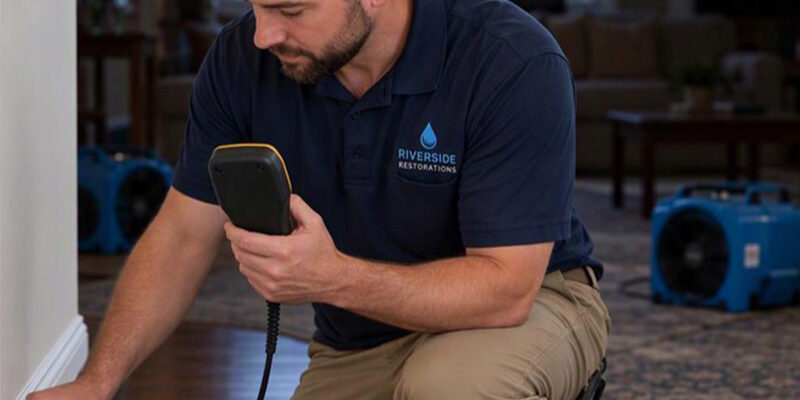
- Moisture meters: These help check subfloors or drywall for trapped moisture, especially when urine or water damage is involved.
- Your nose: Train your nose to recognize common, even if faint, odors, such as mold, bacteria, and urine. Field experience and intentional training both sharpen this vital tool.
4 | Pet odors: Persistent and personal
Pet urine is one of the most common and challenging odor complaints. Male animals tend to mark perimeters, while females may go centrally or in hidden spots. Over time, urine can seep through the carpet, pad, and subfloor, creating contamination layers.
Here are a few essential tips:
- Don’t rely on deodorizers alone; they only mask the problem.
- Identify the type of pet and behavior to help locate odor zones.
- Use enzymatic digesters for organic stains, but remember they take time to work.
- Consider complete removal of contaminated materials if they’re too far gone.
5 | The silent smellers
Even “clean” (Category 1 in a water loss situation) water can cause odor problems. Moisture activates bacteria in building materials, which begin to off-gas, producing that familiar musty smell.
Key advice:
- A musty smell equals active moisture. If it smells like mold, mold is likely present and growing.
- Odor is often your first indicator of an incomplete dry-out or missed material.
- Get it dry and keep it dry. Proper moisture detection and monitoring are essential to avoid long-term odor problems.
6 | Decomposition odors: High risk, high complexity
Decomposition presents a special challenge, not only because of the intensity of the odor but also because of its emotional impact on the client. Bacterial gases cause the smell as organic matter breaks down. These gases can penetrate everything. For severe cases:
- Use heat to expand materials and release trapped odor.
- Employ air filtration devices (AFDs) with carbon filters to absorb odors.
- Never attempt these jobs without proper personal protective equipment (PPE), training, and trauma-scene certification.
7 | Smoke odors: Tiny particles, big problems
Microscopic smoke particles press into materials during a fire, making smoke odor the hardest to remove.
- Depending on the severity, source removal comes first. This could mean cleaning or a full demo.
- Encapsulation or sealing may be necessary after thorough cleaning.
- Know your fire. The type (protein, synthetic, etc.) affects the odor’s behavior.
8 | Choosing the right tools
Because every odor job is different, your truck should always be stocked with:
- Black light and moisture meter
- Air filtration devices (with HEPA and carbon filters)
- Enzymatic and oxidizing agents
- Ozone or hydroxyl generators (appropriately and safely used)
- Detergents
Know when to use which tool and read the labels. Most mistakes come from misused chemistry.
9 | Educating clients and setting expectations
When quoting a job, walk clients through the process:
- Explain what’s causing the odor.
- Describe what steps are needed to resolve it.
- Offer options if they decline complete remediation (flush and seal vs. full removal).
Never guarantee complete odor removal unless you control all factors, including the whole source access and removal. If performing pet odor removal and the animal will remain in the home, that’s another factor to consider.
10 | Pricing it right: End game
Pricing odor work isn’t about square footage but time, labor, equipment, and risk. Determine your overhead, set an hourly rate, and charge based on job complexity. You’re not just cleaning; you’re solving a problem no one else can fix.
Odor removal isn’t about covering up. It’s about identifying the real problem and having the skills and tools to solve it. When you follow the core principles and educate your clients, you don’t just neutralize bad smells. You build trust, authority, and a reputation for excellence in your community.

Jeff Cross
Jeff Cross is the ISSA media director, with publications including Cleanfax, Cleaning & Maintenance Management, and ISSA Today, as well as multimedia programs such as Straight Talk! and Take 5 With Cleanfax in video and podcast format. He can be reached at [email protected].