Hidden Hazards of Fentanyl Cleanup
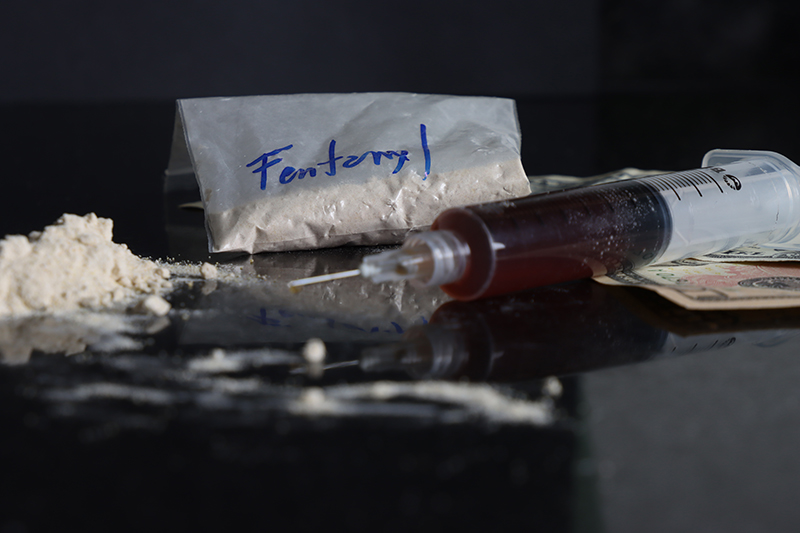
Fentanyl-related cleanup efforts can overwhelm untrained responders because the drug is extremely potent and hazardous in very small amounts. Exposure risks are often invisible, with residues present on surfaces or in dust, and standard protective equipment is insufficient.
“Without specialized training, responders may not recognize exposure risks, early symptoms, or proper response procedures, increasing the likelihood of serious medical emergencies,” said Brenden Williams, general manager and co-owner of PuroClean in Manatee and Sarasota, Florida.
One of the major issues with any clandestine drug event is the risk of cross contamination.
“Many in the disaster clean up industry fail to understand the risks and proper procedures for determining the extent of contamination, the scope of work, the required training of employees dealing with a hazardous substance, and the closure report by a third-party consultant with hard lab analysis,” explained Thomas Licker, senior vice president of regulatory business practice at First Onsite Property Restoration, Monroe Township, New Jersey.
Michael Renfroe, Denver-based national environmental project director at BluSky Restoration, again has observed the primary challenge as insufficient training and awareness of fentanyl’s dangers. For example, 2 micrograms of fentanyl, which is smaller than a grain of salt, can be a lethal dose, and touching it can be fatal.
“Restoration companies have years of experience cleaning contaminants like smoke, mold, and fecal coliform, but little to no experience cleaning hazardous chemicals like fentanyl,” Renfroe explained.
Unlike most restoration cleanups, fentanyl scenes involve hidden, lethal hazards at trace levels.
“These jobs require specialized PPE [personal protective equipment], strict contamination controls, and trained protocols to prevent exposure and cross contamination,” Williams explained. “The risks, liability, and need for emergency preparedness are significantly higher than in standard restoration work, making specialized training essential.”
Training first
A 40-hour, hands-on Occupational Safety and Health Administration (OSHA) Hazardous Waste Operations and Emergency Response (HAZWOPER) training, which is a general course required when working with most hazardous substances, is recommended for fentanyl-related cleanups. HAZWOPER training teaches workers to identify hazardous substances, protect themselves properly, and avoid accidental exposure.
Restoration professionals dealing with handling fentanyl-related cleanups also need clear decontamination training, Williams said. This training teaches them how to remove fentanyl safely without spreading it to other areas, following structured methods such as the SoRite decontamination protocol. Williams also recommends using testing kits to check surfaces before and after cleaning, helping confirm the space is safe—not just visually clean.
Licker also mentioned that one day of PPE and instrument training for general site workers, along with three days of field experience, are required for supervisors and managers involved in fentanyl-related cleanups. Although guidelines are available through the Environmental Protection Agency (EPA) and the American Bio Recovery Association’s (ABRA) Bio Recovery Site Assessment, the Institute of Inspection Cleaning and Restoration Certification (IICRC) has just published the ANSI/IICRC S900 standard.
Regulations
Currently, no federal or state regulations specifically to address fentanyl cleanup exist. The EPA published the Voluntary Guidelines for Methamphetamine and Fentanyl Laboratory Cleanup in August 2021, but they are voluntary and not regulated.
That said, restoration companies are still required to follow existing safety rules, especially OSHA’s HAZWOPER.
“Those rules require proper training, protective equipment, and safety procedures whenever dangerous substances may be present,” Williams said. “As fentanyl contamination becomes more common, it’s widely expected that clearer, more specific guidelines will be developed.”
Regarding waste disposal requirements, the EPA regulates waste in the U.S., but fentanyl or other potential analogs are not yet classified as hazardous waste, Licker added. However, recently the EPA had discussions with the Drug Enforcement Administration (DEA). “With fentanyl and/or similar events with contamination with Schedule I drugs, it has been determined that the DEA requirement of rendering such drugs unretrievable means incineration,” he explained.
Best practices
The minimum requirements for the actual cleanup practices are in the ANSI/IICRC S900. However, risk assessment and scope development, especially when you are dealing with an unattended death overdose comingled with drug residue, is outlined in ABRA’s Bio Recovery Site Risk Assessment.
“The EPA has put out their guidance on meth and fentanyl cleanup in clandestine drug labs, but it does not include the cross contamination from casual drug use,” Licker explained. “Be cautious of conflict of interest—always have a third-party environmental consultant be responsible for the extent of contamination sampling and clearance sampling, and report. Always have hard lab data to back you up. You need quantitative data to back you up on both sides of the remedial action.”
Renfroe added that the EPA recommends isolating the work area and heating, ventilation, and air conditioning (HVAC) system using poly sheeting.
Best practices for fentanyl-related cleanups also start with treating every scene as potentially hazardous, even if contamination isn’t visible. “Professionals should first secure the area, limit access, and wear proper protective equipment designed for hazardous materials,” Williams explained. “Using a structured decontamination process is critical, rather than relying on general cleaning methods that can spread residue.”
PPE
Because fentanyl is dangerous in very small amounts, cleanup crews need more protection than normal. This usually includes gloves, protective suits, eye protection, and a respirator.
“Workers also need to remove and throw away that gear carefully, so residue isn’t spread to other areas,” Williams added. “This helps make sure the space—and the people cleaning it—stay safe.”
PPE can include self-contained breathing apparatus (SCBA), supplied-air respirators (SARs), and hooded powered air-purifying respirators (PAPR). “I wouldn’t recommend anything less,” Licker explained, adding, “You need to set up a three-stage contamination reduction corridor to properly decontaminate equipment and personnel leaving the exclusion zone.”
Renfroe agreed that employees should wear appropriate PPE and be thoroughly trained in handling hazardous chemicals. “Contaminated materials should be neutralized with a neutralizing solution before handling,” he explained. “All materials should be bagged and disposed of in accordance with local, state, and federal regulations.”
While PPE levels are based on the potential for exposure and the level of contaminants, at a minimum, chemical-resistant suits with head and foot coverings, eye protection, a National Institute for Occupational Safety and Health-approved air-purifying respirator, and chemical-resistant gloves should be worn, Renfroe added. “It should be noted that fentanyl particles can be as small as 0.2 microns, which is smaller than the filtering capabilities of a HEPA [high-efficiency particulate air] filter at 0.3 microns,” he said.
Preparing for the future

As the use of fentanyl grows, the possibility of employee exposure grows with it.
“Fentanyl-related cleanups should only be done with trained personnel and supervised by an experienced supervisor who has extensive training in hazardous waste,” Renfroe said. “I recommend having a CIH [certified industrial hygienist] write a company policy on how to work in areas where fentanyl exposure is possible and have a strict health and safety program that ensures employee safety.”
As fentanyl and other synthetic opioids increasingly appear more often in homes, vehicles, and public spaces, Williams anticipates more fentanyl-related cleanups in the years ahead. “That means restoration companies will need to be ready, not just for traditional jobs like water and fire damage, but for scenes with hidden hazards that require careful handling,” he explained.
To be prepared, companies should invest in proper training, including safety training such as HAZWOPER and hands-on instruction on safely decontaminating spaces.
“It also helps to adopt clear cleanup methods and testing so that teams can check before and after cleaning to make sure the job was done safely,” Williams said. “In short, being prepared means treating fentanyl cleanups with the same seriousness as other hazardous jobs—training people well, using the right tools, and following safe practices every time.”
Licker said the best advice he can give is to bring in professionals who have experience.
“Too often, industry players jump at the chance to get into something lucrative, and it ends up destroying their reputation,” he explained. “These events can kill someone, or if not properly decontaminated, can be brought back home to their loved ones. This is not for your typical restoration company that is primarily focused on the commodity events. This is for people who have invested in the time, training, equipment, and people to mitigate the risks to their employees, their families, and occupants of the spaces that they are remediating.”