
Mold’s New Rulebook and the Microbial Shift Reshaping Remediation
Doug Hoffman, executive director of the National Organization of Remediators and Microbial Inspectors (NORMI), didn’t sugarcoat it: The mold and microbial sector is entering a new phase, and the biggest shifts aren’t happening in the classroom. They are happening in legislation, public health policy, and military housing.
“We’re at a turning point,” Hoffman said during a recent roundtable discussion aboard the Carnival Horizon, the venue of a Restoration Journeys and NORMI Caribbean cruise to Aruba, Bonaire, and Curacao. He described the last two years as a watershed moment for how remediation work is scoped, regulated, and verified.
The direction of travel is unmistakable—away from inconsistent state licensing and toward something with potentially greater reach: federal and state mandates that steer the public toward credentialed professionals, with defined expectations for assessment, protocols, and outcome verification.
Not just mold
Hoffman is careful about framing. The industry tends to lead with mold because it’s visible and familiar, but the real problem is broader. “What we’re dealing with is an indoor air quality problem, from a broad standpoint,” he said. “It has to do with bacteria, and viruses, and particles, and a lot of other things that are going on in the environment.”
Mold, in this view, is a useful proxy, an indicator that points to a larger contamination picture. “We know that when we’re cleaning up a mold issue, we’re also cleaning up other problems that exist,” Hoffman said.
That framing matters because it redefines what success looks like. If the work is treated as cosmetic cleanup, success is whatever appears clean. If it’s treated as microbial contamination control, success requires evidence.
Hoffman returned to that distinction repeatedly: the industry must stop relying on what looks clean and start proving what is clean.
The assessor as architect
The most consistent thread running through Hoffman’s remarks is the centrality of the assessor, not as a formality, but as the backbone of competent remediation.
“The right way to do it is the assessor should be the architect of the project,” Hoffman said. “He’s the one who should do the pretesting, write the protocol, and then make the post-remediation testing.”
He acknowledged that this model is far from universal. Independent pre- and post-testing, where the assessor drives the scope and verifies the outcome, happens, but not consistently or often enough. That gap between best practice and common practice is precisely what emerging legislation is beginning to close.
Focus on public health
Some in the industry once hoped that widespread state licensing would professionalize the field. That hasn’t completely materialized. As Hoffman mentioned, only five jurisdictions maintained active licensing: Florida, Louisiana, Texas, the District of Columbia, and New York. Arkansas and Virginia had passed licensing laws but suspended them, lacking the infrastructure to enforce them.
But Hoffman argued the replacement trend may be more consequential than licensing ever was. Rather than creating regulatory boards to oversee contractors, states are now directing their public health departments to handle mold-related inquiries, folding exposure concerns, symptom reporting, and referral pathways into existing public health infrastructure.
California moved first. Illinois, Iowa, North Carolina, West Virginia, Virginia, and New Hampshire have since shown similar momentum. In Illinois, Hoffman noted a particularly significant emphasis: “It’s not just about a mold problem, it’s about the mold effects that somebody might be suffering.” In other words, the focus is on illness, not property damage.
Equally significant is what these systems are beginning to specify: When states recommend certifying bodies, they’re naming the IICRC and NORMI. That’s not licensing, but it functions similarly—credentials serving as a practical gateway to legitimacy, with or without a formal licensing requirement.
A national security issue?
If state-level change is gradual, federal action could move faster, and the catalyst is military housing.
“The military privatized housing has been an absolute disaster,” Hoffman said. Billions of dollars flowed over the years with minimal oversight and no enforceable standard ensuring remediation was done correctly. The legislative response is now accelerating on two tracks.
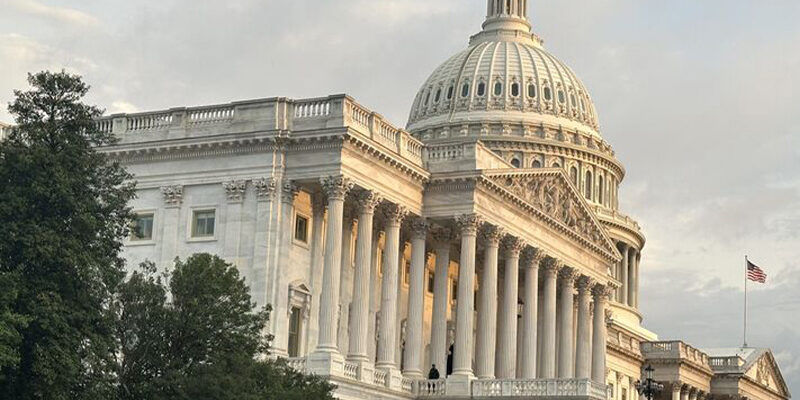
The first is the National Defense Authorization Act (NDAA), signed on Dec. 18, 2025, which gives Congress 180 days to develop guidance documents covering how remediation work should be performed and how contractors should be compensated.
The second is a bill introduced by Connecticut Senator Richard Blumenthal shortly after: the Mold Act, or Military Occupancy Living Defense Act. Hoffman described it as among the most consequential pieces of legislation the industry has ever faced.
The bill requires that an assessment be completed before any remediation begins, which means no more dispatching crews to scrub visible mold without first establishing the scope and cause. It mandates that remediation follow a defined process aligned with the IICRC S520 standard. It requires post-remediation clearance testing, annual monitoring, and reporting. And critically, it specifies that anyone performing assessment or remediation must hold and maintain a certification from the IICRC, NORMI, or ACAC.
“You can’t just go in and do remediation because there’s visible mold,” Hoffman explained.
The scale of the problem and the workforce demand it will generate is staggering. Hoffman cited 185,000 military homes currently in need of remediation. When he hears concerns about whether the workforce is ready, his answer is direct: “We have a workforce, and we will have a workforce.”
At a press conference, Hoffman described hearing from a military family whose four children had been made sick by conditions in their housing so severely impacted, he said, that they would never be able to qualify for military service themselves.
That story captures why this legislation has traction. When mold exposure becomes a readiness problem, a public health crisis, and a taxpayer accountability failure all at once, the government doesn’t just pay attention; it acts. It writes requirements.
And those requirements, increasingly, start with the assessor.

Jeff Cross
Jeff Cross is the ISSA media director, with publications that include Cleaning & Maintenance Management, ISSA Today, and Cleanfax magazines. He is the previous owner of a successful cleaning and restoration firm. He also works as a trainer and consultant for business owners, managers, and front-line technicians. He can be reached at [email protected].



 Loading ...