Does That Surface Really Need a Coating?
Have you ever walked into a building and wondered, “Why did they wax that floor?”
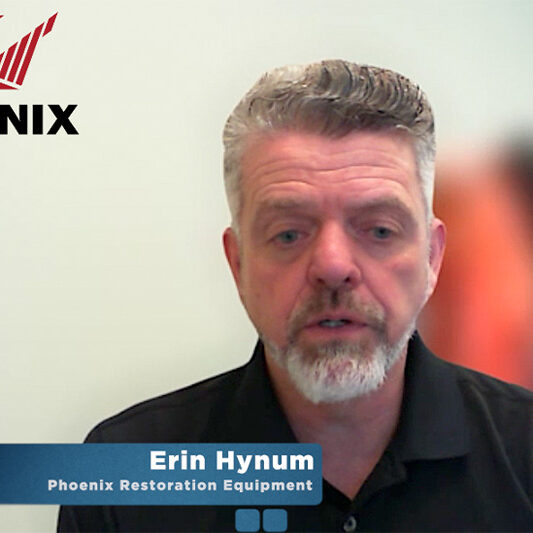
Robert Falzone, owner of Expert Stone Repair and an IICRC instructor, said many wonder whether it was because the cleaner was lazy or because the people paying told them to.
Falzone said whether to coat a surface can be controversial. Many put a coating on a floor to make it last longer. But what type of coating do you use, and when do you apply it?
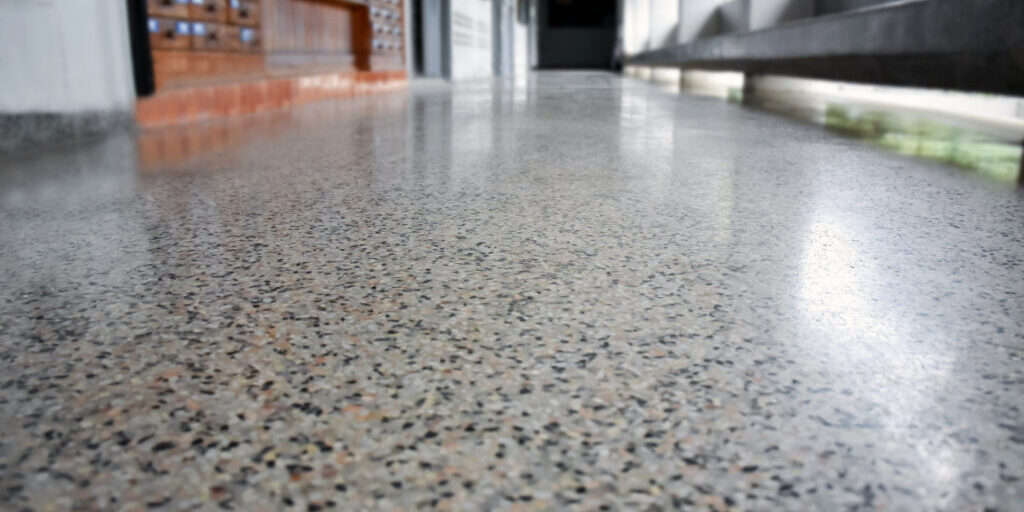
Falzone gave an example of multiple wax coatings applied to busy airport epoxy terrazzo flooring over the years, which now shows scratches and dirt trapped in those scratches, making the floors look unclean.
Before coating a surface, Falzone said to identify it first. For example, is the surface super breathable? If you put a wax on something breathable, it can suffocate the surface.
“We have got to identify the surface, assess the condition, and match the method of installation,” Falzone explained.
He also cautioned that you could walk into a trap as a contractor in some of these facilities. Many cleaners walk into a nice facility and ask, “What did they do?” “You want me to maintain this, and the expense is stripping the wax over 10,000 square feet.”
Falzone wants to educate the industry on whether to apply a coating to avoid problems moving forward. For example, if you are going to do progressive diamond polishing, progressive polishing costs money. Is it cheaper to apply a coating so it shines? Yes!
“So many people are putting down wax because they’re not interested in doing a progressive shine,” Falzone explained. “The wax is a shortcut.”
However, sometimes you need a coating. Falzone gave an example of applying a coating to polished concrete to amplify the shine.
“But if you’re going to use the wax coating as a shortcut, that’s not good,” he explained.
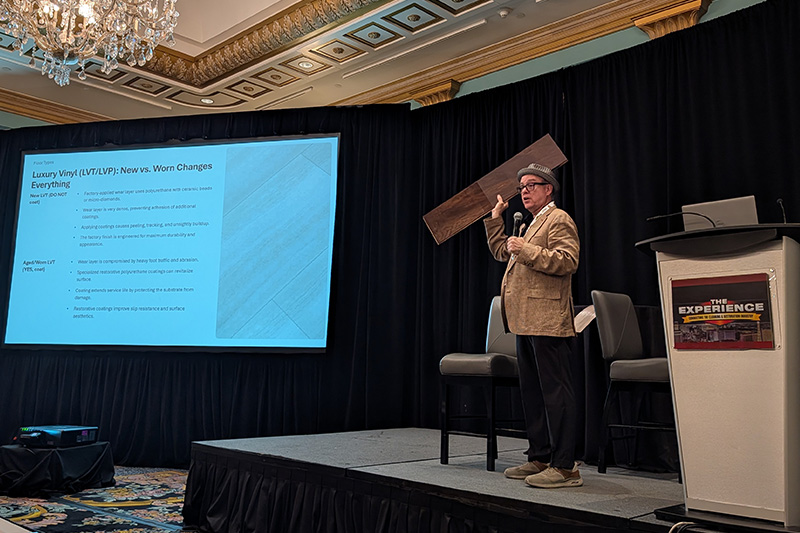
Luxury vinyl plank (LVP) and luxury vinyl tile (LVT) flooring are often another industry problem, Falzone said. Often, a commercial building wants to install LVP or LVT to make the floor easier to maintain. But that’s not always the case, Falzone said.
“If you have brand new LVP or LVT, the manufacturer tells you, ‘You put a coating on my floor. I’m going to void the warranty,’” he cautioned.
While the warranty will last some years, it will not cover the wear that often occurs in busy facilities and high-traffic areas. In some busy facilities, LVP and LVT flooring can be worn down in three or four years.
“You have to understand the position of the manufacturers, and it’s controversial on my part because I’m the guy that gets called in after the floor has been destroyed,” Falzone explained.
Additionally, LVP and LVT have a UV layer, a wear layer and a decorative layer. These coatings will bond to the UV layer and make the flooring last longer. However, if the UV layer is installed incorrectly, it will come off easily.
Falzone also said that if you are going into a situation where the LVP or LVT is already worn out, if you do a light sanding on it to remove all the scratches, vacuum it, and damp mop it, the floor becomes a dull LVP or LVT that a covalent-bonded coating can be put on to restore the shine.
Natural flooring also isn’t going away, Falzone cautioned. For example, linoleum is made from natural materials like linseed oil, wood flour and cork. These materials are porous and vulnerable to drying out. In turn, these floorings require a compatible finish that maintains flexibility, prevents drying and protects against damage from high-pH cleaners, Falzone said.
“You have to learn to identify natural materials versus synthetic on the flooring side,” he explained. This, in turn, will help you determine whether to coat the flooring.
Additionally, you must weigh the costs of applying the coating versus the maintenance costs. “The floor type—not habit or assumption—should always drive coating decisions to ensure optimal protection and longevity,” he said.
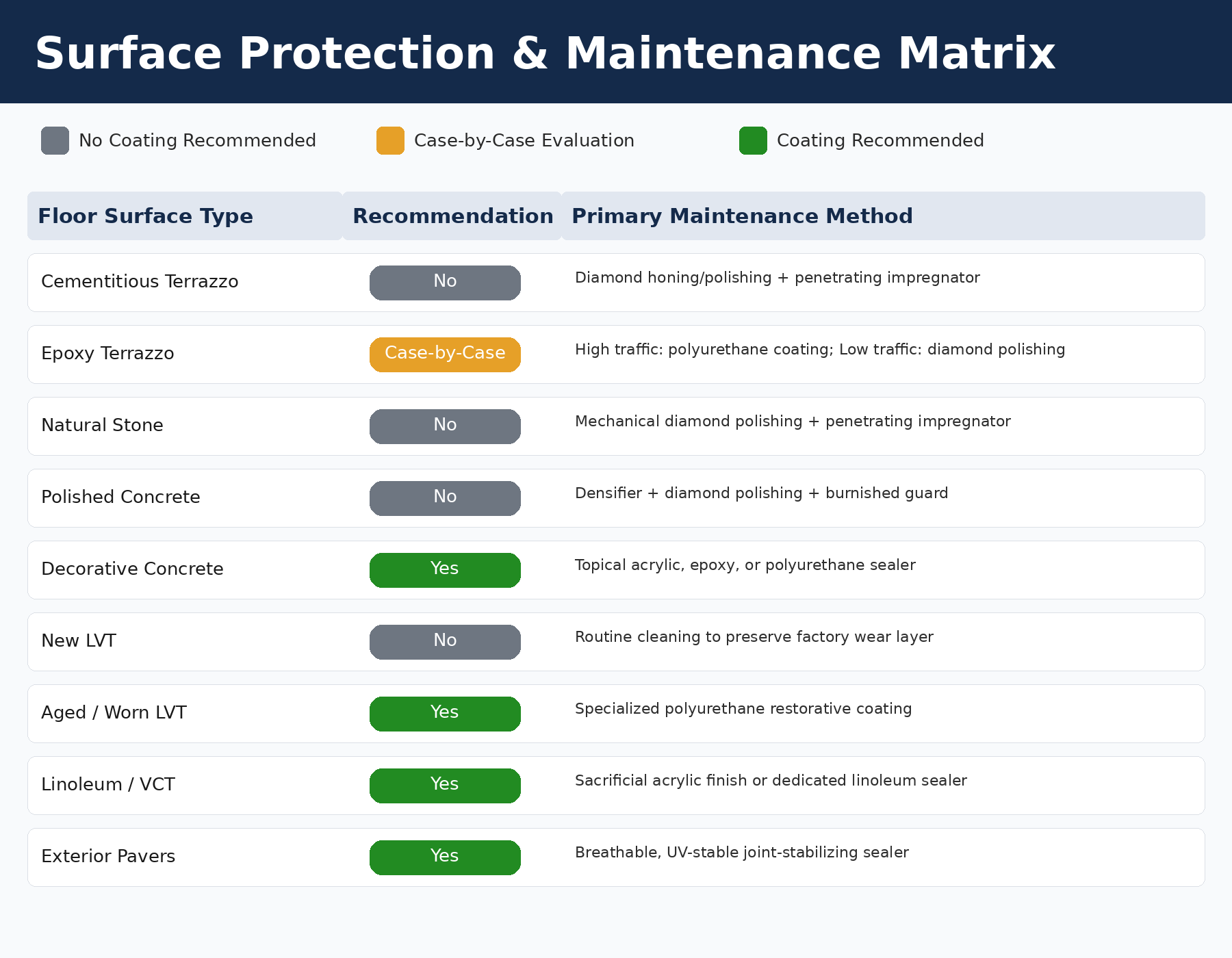
Falzone offered a quick-reference matrix on whether to coat the floor: