School is Now in Session: Removing Graphite and Crayon from Textured School Flooring
In schools, pencil graphite and crayon marks are more than cosmetic problems. When they become packed into the texture of resilient flooring, they can frustrate even well-run custodial programs.
School floors must deal with hallway traffic, classroom movement, art projects, cafeteria spills, chairs sliding back and forth, and anything that can hitch a ride on the bottom of a shoe. As many schools have moved away from acrylic-finished vinyl composition tile (VCT) and toward less “maintenance-intensive” flooring, practical “how do I deal with this?” questions have increased.
 Near the top of that list is this one: How do we remove graphite marks and crayon residue from tactile or textured
 flooring without damaging the surface?
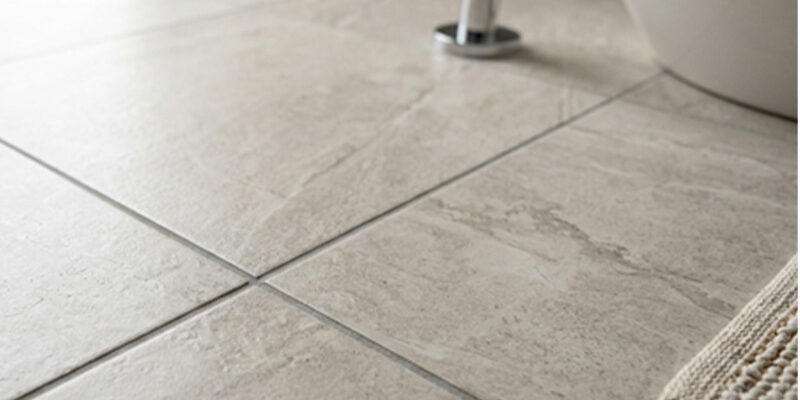
Texture improves traction and appearance, but it also gives non-dissolvable soils a place to settle. Graphite marks and crayon residue are often not sitting on top of the floor; they are packed into the surface profile. That is where many cleaning programs get into trouble.
The floor is not the problem—the process is
The floor is rarely the root problem. More often, the challenge is matching the removal process to the soil and the surface. Graphite is an extremely fine, dark solid that can be driven deeper into texture when the wrong tool or motion is used. Crayon residue is different because it commonly contains waxes and pigments, which may require controlled scraping, towel-applied solvent, or gentle heat after the manufacturer’s guidance has been checked.
Once that distinction is clear, the connection between routine cleaning and periodic deep cleaning becomes easier to understand. Daily care keeps soil from building up; restorative care resets the surface when soil has already settled into the texture.

Andy Bayler, maintenance and care specialist at Tarkett, explains: “From my experience working with our end users in the field, I find that when a janitorial or custodial staff is having a difficult time with daily processes, it typically means they haven’t performed the deep cleaning properly. When deep cleaning becomes a burden, it almost always means they are not being thorough enough with their daily cleaning. The two processes go hand in hand as part of a well-structured cleaning and maintenance program.”
In other words, daily and restorative procedures should not be treated as separate efforts. Each one supports the other, especially on textured resilient flooring where soil can settle below the visible surface.
A practical field procedure
With that foundation in place, the field procedure should follow a consistent sequence: remove dry soil, apply appropriate chemistry, allow dwell time, agitate with the least aggressive effective tool, rinse, and dry.
- Start dry. Remove loose soil with a microfiber dust mop, soft broom, or suction-only vacuum.
- In a trigger spray bottle, use a properly diluted neutral cleaner designed for resilient flooring. Apply enough solution to wet the spot, not flood the floor.
- Give chemistry time to work. Dwell time allows the surfactants to create separation, loosening what is packed into the texture.
- Agitate the areas with the least aggressive tool that will do the job. As Andy Bayler notes, brushes are often more effective than pads on textured, resilient materials because they can reach into the surface profile. A soft nylon detail brush or white or red abrasive pad may be appropriate. Work from the outside toward the center.
- Rinse with clean water.
- Dry the area prior to allowing foot traffic.
Crayon residue needs the same basic sequence, but its wax content may require a few controlled adjustments.
Before using any solvent or heat, confirm the flooring manufacturer’s maintenance guidance and test in an inconspicuous area. For waxy residue that will not release, a small amount of isopropyl alcohol may be applied to a clean white towel, not directly to the floor. Do not soak seams or edges.
- Begin with the dry soil-removal step listed above.
- Use a plastic scraper to remove excess material.
- Apply properly diluted neutral cleaner only as needed to wet the spot, not flood the floor.
- Allow dwell time so the cleaner can loosen residue from the texture.
- Agitate carefully with the least aggressive effective pad or brush, working from the outside toward the center.
- If the texture is holding the crayon residue and it is not releasing, a hair dryer on low heat can be used to gently soften the wax and assist with removal. Keep the heat moving and avoid overheating the floor.
- Rinse with clean water.
- Dry the area prior to allowing foot traffic.
Tools and chemistry: Do not let “aggressive” replace “correct”
Always begin with manufacturer guidance and the least aggressive effective method. Magic erasers, steel wool, metal brushes, harsh solvents, bleach, ammonia-heavy cleaners, and aggressive stripping pads can create problems that cost far more than the original mark. They can dull the wear layer, discolor the floor, or increase future soil retention. Good floor care is not about attacking the floor; it is about choosing chemistry and agitation that solve the specific soil problem without shortening the floor’s useful life.
Make it easy for your school teams to do the right thing
- Confirm process and chemistry use with the flooring manufacturer’s guidance before making it part of the standard procedure.

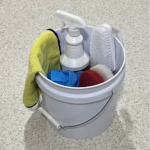
- Build a small, spot-cleaning kit for classrooms, art rooms, cafeterias, offices, and custodial closets.
- Include neutral cleaner, clean white towels, microfiber cloths, a soft nylon brush, white or red pads—the doughnut from a floor pad works great—gloves, and clear written instructions.
- Train the staff to either report or remove marks as soon as possible, before foot traffic grinds the material deeper into the texture.
- Inspect the feet of tables and chairs regularly to ensure they are flat, clean, smooth, and well maintained. Properly maintained furniture feet help reduce scratching, scuffing, and embedded soil, supporting overall flooring maintenance and care.
- Keep entrance matting and routine dry soil removal in the program. Soil control is still the first step in resilient floor maintenance.
The bottom line
Graphite marks and crayon residue on textured luxury vinyl tile (LVT) are not signs that the floor has failed. They are signs that the cleaning process must match the soil and the surface. When school teams remove dry soil, use the right cleaner, allow dwell time, agitate gently, rinse, and dry, they protect appearance, reduce repeat labor, and extend the life of the flooring investment. That is what professional floor care should do: Solve today’s problem without creating tomorrow’s.

Bill Luallen
Bill Luallen, the technical director for XL North, a division of the Textile Rubber and Chemical Co., has more than 25 years of experience in the floor care industry. He is the IICRC Technical Advisory Committee (TAC) Chair of the Commercial Carpet Maintenance Technician (CCMT) Committee and participates on the CRI 204/205 Carpet Maintenance and Cleaning Standards. Contact Luallen at 401-633-4656 or [email protected].