2026 Restoration Industry Leaders Review: Southeast Restoration
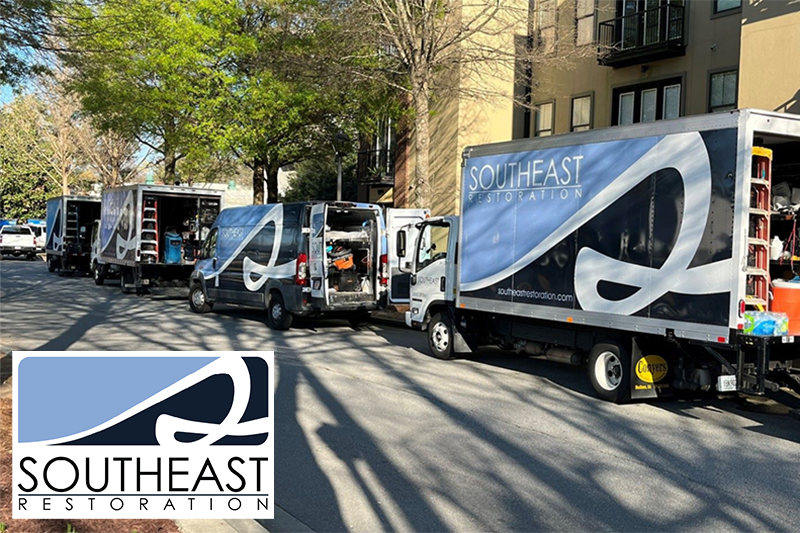

Ben Looper
Building a restoration company is hard enough. Building one that spans multiple states, employs hundreds of team members, and serves national clients while still feeling like a family operation is a different order of difficulty. Ben Looper has spent nearly 30 years at exactly that.
Looper is the founder, CEO, and president of Southeast Restoration, which he founded in 1999. He came up through the construction trades and learned restoration in the late 1990s under a high school classmate who had gotten licensed in Florida before returning to Georgia to start his own company. After a couple of years alongside him, Looper struck out on his own. He also recently picked up a title that has nothing to do with the org chart: grandfather. His son, Holden, who grew up in the business and now works in it, has given him his first grandson.
Close to home
Looper describes himself as wired to see around the corner. From the beginning, the plan was never to plant a flag in a single city. It was to serve several communities that a company could reach and return from within a day, and to do it with its own people.
“We are not in the disaster recovery business. We have a different business model,” Looper stated. When a catastrophe hits one of the company’s markets, its team members and trade partners respond rather than crews flown in from across the country.
That last part is not incidental. Southeast Restoration is built so employees can go home to their families daily without long stretches away. Looper calls it a family-focused, growth-oriented, Christian-based business, and he keeps all three in front of every decision.
Extraordinary culture
What sets the company apart, in Looper’s telling, is its people. “One of our core competencies is an extraordinary culture made of remarkable team members,” Looper praised. The core purpose, restoring lives while repairing property, is meant to apply inside the company as much as outside it.
He did not set out to engineer any of it. “We were creating culture before we knew we were creating culture,” Looper pointed out. It was outsiders who kept telling him what the company had. The name came later. Hearing people describe athletes like Michael Jordan and Tom Brady as the GOAT—greatest of all time—he figured the label fit what others saw in his team.
“Maybe we had the GOAT culture,” Looper said. The company built a mantra around it and now has a culture guide that walks new hires through orientation, along with year-round programs.
Family, inside and out

Southeast Restoration is a proud family business.
For Looper, family is both literal and not. His wife moved into an administrative role after their youngest daughter left for college. His son started on a mitigation truck at 13, spent his summers there, and never got off it. His oldest daughter worked in the business for a while, decided it was not for her, and is now with a company in Nashville. His youngest is in college and headed in her own direction. Looper said he has told all three he will back whatever path they choose.
The same word covers everyone else on the payroll. “We’re together as much or more than we’re with our own family sometimes, so we consider each other family,” Looper added. When a team member’s family is struggling, he added, it shows up everywhere, so supporting those families is part of the job.
Faith as a strategy
Taking care of people, such as feeding those affected by Hurricane Helene, is a key component of how Southeast Restoration shines.
Faith runs through both Looper’s life and the company’s identity, and he does not keep it quiet. He studied Truett Cathy, the Atlanta businessman who founded Chick-fil-A and took a lesson from how Cathy ran things. “Faith was a foremost strategy in their organization,” Looper said.
It works much the same way at Southeast Restoration. The company prays before meetings and meals, circulates open prayer requests, and runs an internal Southeast Cares program to support employees. It also gives every team member five mission days per year to serve others, in addition to their paid time off. Not everyone uses them, Looper observed, but the ones who do come back with stories, and a few new hires have come out of it.
“We are unapologetic about our faith here at Southeast Restoration,” Looper commented.
Proactive investing
Looper is direct about where restoration owners go wrong. Too many capable workers, he said, get thrown into the fire and do good work, but no one is looking out for their next step or training them for the role after this one.
“It’s the investment of time and resources into those team members that … will separate the restoration companies that are successful from some of those that may struggle,” Looper stated. With younger workers changing jobs more often, he sees a clear roadmap and real training as the key to giving both the company and the employee a reason to stay and a path to succeed.
Sharpen the ax
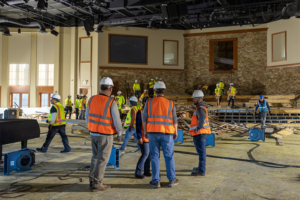
Southeast Restoration is proud of how it rallies around those impacted by a major loss and brings comfort in times of distress. It’s part of their faith in serving others.
Looper often thinks about what he would tell his 18-year-old self, and the answer is not a war story. It is patience. He believes the industry and his own company could have moved faster if he had spent more time planning at the outset rather than rushing to act.
He keeps a line from Abraham Lincoln in mind. “‘Give me six hours to chop down a tree, and I’ll spend the first four sharpening my ax.’ I like to live off of that philosophy,” Looper said. The point, as he put it, is to do the work on the front end rather than work for its own sake.
He sees the opposite habit in newer companies. “They want to get in the arena as quickly as they can and fight all the lions and tigers,” Looper said. Spend that energy preparing first, he argues, and the whole industry moves along faster.
As noted on the company website: “We aspire to bring happiness to our team members and their families, to be an inspiration in our communities, and to make a positive impact on every life we touch.”
BONUS VIDEO CONTENT

Jeff Cross
Jeff Cross is the ISSA media director, with publications including Cleanfax, Cleaning & Maintenance Management, and ISSA Today, as well as multimedia programs such as Straight Talk! and Take 5 With Cleanfax in video and podcast format. He can be reached at [email protected].