Beyond the Burn
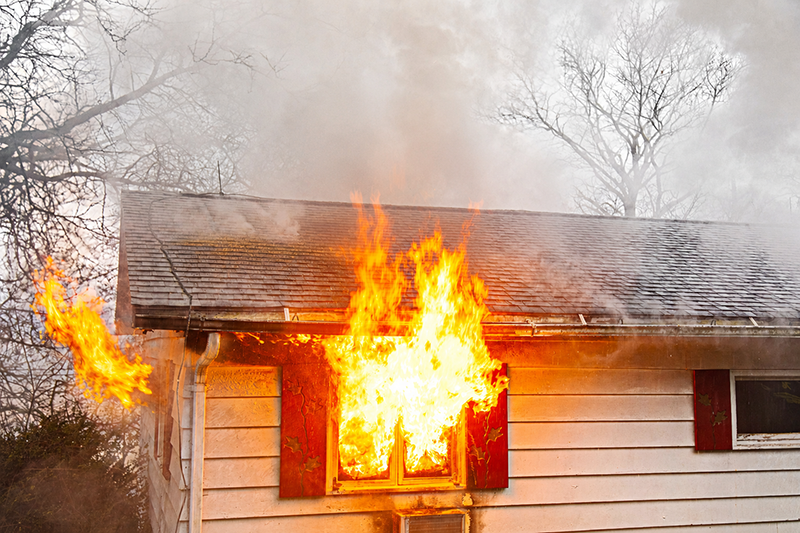
When most people think about fire damage, they think about charred materials, blackened walls, and the visible destruction left behind after the flames are extinguished. What many property owners fail to realize is that the fire itself is often only the beginning of the problem. The real challenge often lies in the smoke and odors that remain.
Smoke contamination can travel far beyond the area directly affected by the fire, infiltrating HVAC systems, settling into porous building materials, contaminating contents, and creating indoor environmental concerns that may persist long after the visible damage has been cleaned.
Whether the source is a structural fire, a kitchen fire, an electrical event, or even wildfire smoke intrusion, the impact on indoor air quality (IAQ) and occupant health can be significant.
Understanding what smoke leaves behind—and how to assess, evaluate, and address it properly—is essential for protecting both buildings and the people who occupy them. It’s all about creating a cleaner, safer, and healthier indoor environment, and that must start with an assessment of the damage, visible and invisible.
More than soot
Smoke is a complex mixture of airborne particles, gases, vapors, and chemical compounds produced by incomplete combustion. Depending on what burned, smoke may contain carbon particles, volatile organic compounds (VOCs), semi-volatile organic compounds (SVOCs), polycyclic aromatic hydrocarbons (PAHs), acids, heavy metals, and other potentially harmful contaminants.
The composition of smoke changes dramatically based on:
- The fuel source: What kept it burning?
- Combustion temperature: How hot did it get?
- Oxygen availability: Was it a contained space or open air?
- Duration of the fire: How long did it burn?
A structure fire involving modern synthetic furnishings may produce significantly different contaminants than a wildfire, yet both can create conditions that compromise indoor environmental quality. One of the greatest misconceptions in restoration is the belief that if surfaces appear clean, the contamination has been removed. Many smoke-related contaminants are microscopic and may remain hidden within building materials, contents, duct systems, and settled dust reservoirs.
Hidden health implications
The smallest smoke particles often create greater concerns. Environmental Protection Agency (EPA) sponsored research indicates that fine particulate matter, including particulate matter with an aerodynamic diameter of 2.5 micrometers or less (PM2.5) and ultrafine particles (UFPs, also called PM0.1), which are less than 0.1 micrometers, can remain suspended in the indoor environment or become reintroduced into the breathing zone through normal occupant activity. These particles may be inhaled deep into the respiratory system and can contribute to irritation and discomfort, particularly among sensitive individuals.
Children, elderly occupants, individuals with asthma, those suffering from respiratory illnesses, and immunocompromised individuals may be particularly vulnerable to smoke-related contaminants. Occupants commonly report persistent odors, eye irritation, respiratory discomfort, headaches, throat irritation, and increased allergy-like symptoms.
While visible damage often receives immediate attention, occupant exposure concerns frequently remain unaddressed unless a comprehensive evaluation is performed, and that should be done as quickly as possible before the restoration work begins.
Odor is a symptom
One of the most common complaints after a smoke event is lingering odor. As with mold and other microbial issues, attempting to simply cover up the malodor does not resolve the problem. Many property owners mistakenly believe odor is simply an inconvenience. Odor often serves as an indicator that smoke residues or combustion byproducts remain within the structure. Smoke molecules penetrate deeply into drywall, insulation, upholstered furnishings, wood framing, HVAC systems, and porous finishes.
Masking odors with fragrances, ozone, hydroxyls, or other temporary treatments may improve comfort for a brief period, but it rarely addresses the source of the contamination. Effective remediation focuses on identifying and removing contamination rather than merely covering up the symptoms.
Proper assessment
One of the most important lessons learned throughout the restoration industry is that no two smoke events are identical. The extent of contamination cannot be determined solely by visual observation. This is where an independent environmental assessment becomes invaluable.
Before remediation begins, property owners should understand:
- What contaminants may be present
- Where contamination has migrated
- Whether HVAC systems have been impacted
- Which materials can be restored
- Which materials require removal
- What level of cleaning is necessary
- How success will ultimately be verified
Without a proper assessment, restoration efforts may be incomplete, overly aggressive, or insufficient to restore acceptable indoor environmental conditions. Getting to the source of the problem is always the solution, and that requires a very clear understanding of what you’re dealing with and knowledge of how to resolve the issues.
NORMI can help
The National Organization of Remediators and Microbial Inspectors (NORMI™) Certified Indoor Air Quality Specialists (NCIAQS™) are uniquely positioned to assist property owners, restoration contractors, insurance professionals, and facility managers in evaluating smoke-related contamination concerns. Rather than relying solely on visual observations, NORMI professionals utilize a building science approach that focuses on indoor environmental quality and occupant exposure considerations.
Depending upon project conditions, a NORMI assessment would evaluate airborne particle levels and other environmental indicators to determine the impact of smoke contamination on the indoor environment. This assessment would include:
- IAQ assessment
- The extent of smoke migration
- Areas of contamination
- Potential occupant exposure pathways
- HVAC system involvement
- Conditions requiring further testing
- VOC testing for residual smoke issues, including malodors
- Surface and dust assessment
Because smoke residues frequently settle onto surfaces and accumulate within dust reservoirs, targeted sampling can help identify contamination that may not be readily visible.
Remediation protocols
NORMI professionals can assist in developing objective remediation recommendations that align with accepted industry practices while addressing the specific conditions of the property.
Perhaps most importantly, NORMI professionals can provide independent post-remediation evaluation to determine whether restoration objectives have been achieved and whether the indoor environment has been returned to an acceptable condition.
This third-party verification often provides peace of mind for property owners while helping restoration contractors demonstrate the effectiveness of their work.
More than cleaning
Industry standards such as ANSI/IICRC S700 Standard for Professional Fire and Smoke Damage Restoration emphasize that successful restoration requires more than simply removing visible residues. It is more about what you don’t see than what you do see. Microscopic residue is a health concern, and proper restoration involves:
- Identifying contamination sources.
- Controlling the spread of contaminants.
- Removing impacted materials when necessary.
- Cleaning affected surfaces.
- Addressing odor sources.
- Evaluating IAQ.
- Verifying the effectiveness of remediation efforts.
Ultimately, the objective is not simply to make a property look clean. The objective is to restore a safe, functional, and healthy indoor environment.
The bottom line
Smoke contamination is as much an indoor environmental issue as it is a restoration issue. The contaminants produced during combustion can affect building materials, IAQ, occupant comfort, and potentially occupant health long after the fire is extinguished.
Whether the source is a localized fire event or widespread wildfire smoke intrusion, proper assessment remains the foundation of effective remediation. When questions arise regarding the extent of contamination, the adequacy of remediation efforts, or the safety of re-occupancy, a qualified NORMI professional can provide the independent evaluation needed to make informed decisions and ensure that restoration efforts truly achieve their intended purpose.

Doug Hoffman
Doug Hoffman is the founder and Executive Director of the National Organization of Remediators and Microbial Inspectors (www.normi.org), a not-for-profit training and certification organization for IAQ professionals. His passion has been helping people understand how to live healthier lives indoors and empowering them with the ability to have clean air. Get more information from his book, Mold-Free Construction, at www.moldfreeconstruction.com.
Doug can be reached via e-mail at [email protected].