CIRI Online Science Symposium on Coronavirus Sees High Attendance
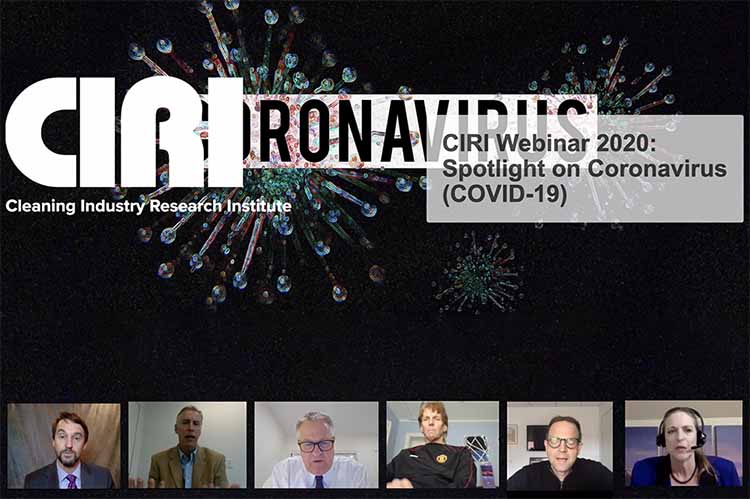
GRANVILLE, OH—April 1, 2020—When the annual CIRI Science Symposium faced a scheduling dilemma due to the spread of COVID-19, organizers did what all of us are doing in the face of the catastrophe—made adjustments and kept moving forward. The event, which was originally planned to take place alongside The Experience Conference & Exposition in Cincinnati this week, moved to an online version of the symposium, which focused on coronavirus cleanup (as well as cleaning science for all situations) and saw massive success with more than 1,000 in attendance.
Using the chat feature of the webinar platform, questions overflowed from attendees, with organizers answering as many as possible either in chat or with the presenters. A poll during the event showed that the audience was primarily in restoration, though attendee background varied—61% disaster restoration contractors, 16% building service contractors/janitorial service providers, 11% trainers/consultants, 7% carpet cleaners, and 3% in-house cleaners.
Look for the recording of the coronavirus cleanup-focused CIRI Science Symposium online soon. In the meantime, here’s a look at some key moments and each session:
The event offered a range of expert speakers on cleaning science and coronavirus cleanup specifically:
Session one focused on “COVID-19: Virus Characteristics & Communications Strategies” with two presentations. First, Patricia Olinger, executive director of the Global Biorisk Advisory Council (GBAC), a Division of ISSA, presented “Crisis Communications and Risk Assessment,” discussing critical aspects of crisis communications, including client and worker communications and risk assessment. Next, Dr. Eugene Cole, LRC Indoor Testing & Research director presented “What You Need to Know About Pandemics and COVID-19,” focusing on the pandemic and its characteristics, how it compares to past pandemic viruses, and how that information applies to the development of relevant cleaning and disinfection practices.
Session two focused on “Testing, Assessment, and Characteristics of High-performance Cleaning & Disinfection.” First up was a combined presentation on “How and Why We Test” from Dr. Richard Shaughnessy, director of the University of Tulsa’s IAQ Research Program, and Dr. Jordan Peccia, Thomas E. Golden Jr. Professor of Environmental Engineering at Yale University. Shaughnessy and Peccia addressed the methods and limiting factors associated with pre- and post-cleaning testing and considered routes of viral exposure that could be interrupted by cleaning.
Next, John Richter of Miami University (Ohio) presented “High-performance Cleaning—What It Is and Why It Is So Important” in which he examined the characteristics of high-performance cleaning processes and explained the connection between it and effective disinfection. Finally, Dr. Greg Whiteley, chairman of the Whiteley Corporation and adjunct fellow of Western Sydney University’s School of Medicine presented “Meeting the Challenges Associated With Effective Disinfection,” discussing effective disinfection requires implementation of strategies that involve product selection, proper application, and dwell time—including complicating factors like biofilms and inadequately cleaned surfaces.
Session three centered on “Pandemic Preparedness, Worker Training, and Worker Safety and Protection.” In the first presentation, GBAC’s Dr. Gavin Macgregor-Skinner, a certified Forensic Operator® and Certified Bio-Forensic Restoration Specialist®, focused on “Preparing for the Next Pandemic.” He discussed the certainty of recurring global pandemics and the expected second wave of COVID-19. He provided preparation guidance to cleaning and disaster restoration professionals in this time of crisis. Lastly, Olinger presented for the second time, this time discussing “Effective Training Strategies of Frontline Workers.” She examined cleaning workers as the frontline of defense against pandemics and specialized training and safety needs and preparedness.
CIRI Executive Director John Downey said during the event’s closing that he had expected people to flow in and out of sessions all day, but even in the closing moments of the Symposium there were more than 800 attendees still watching.
“Attendance for the live-stream symposium was well beyond our most optimistic projections: 1,037 registered and nearly all attended. What was even more gratifying, the vast majority of attendees stayed engaged throughout the Symposium—and it lasted nine hours!” said Downey, who also served as the event’s moderator. He explained webinar analytics showed the average attendee stayed engaged through more than 95% of the webinar. “I think that is a tribute to the quality of our presenters and their presentations.”
Look for the recording of the coronavirus cleanup -focused CIRI Science Symposium online soon.

Cleanfax Staff
Cleanfax provides cleaning and restoration professionals with information designed to help them manage and grow their businesses. https://cleanfax.com/