The Restoration Pulse: Why Technical Truth Still Matters

Editor’s Note: Welcome to The Restoration Pulse, a new column written by industry consultant and advocate Brandon Burton. The column is dedicated to technical, practical, and business-critical issues shaping water damage restoration. This column is built for cleaning and restoration professionals, indoor environmental stakeholders, consultants, trainers, adjusters, carriers, property managers, and others who depend on accurate information, consistent procedures, and defensible decision-making in the field.
The goal is simple: To create a reliable technical touchpoint that connects standards, science, field practice, documentation, and business execution. Restoration is not static. It is influenced by changing building materials, evolving standards, new documentation expectations, climate-driven loss patterns, insurer and program requirements, labor pressure, technology adoption, and the constant need to prove that work was performed properly.
Contractors face persistent, growing pressure on margins, labor, documentation, customer expectations, and operational consistency. Those pressures make technical clarity and efficiency more important than ever. When the work is urgent, expensive, disruptive, and often disputed, the restorer’s ability to explain the “why” behind the work becomes just as important as the work itself.
A new column at a new professional crossroads
This first article also marks an important transition in my own professional life. After leaving my role at Cotality, I have launched Burton Indoor Environmental Consulting, or BIEC, as a full-time consulting firm focused on advocating for and representing professionalism in the disaster recovery and mitigation industry.
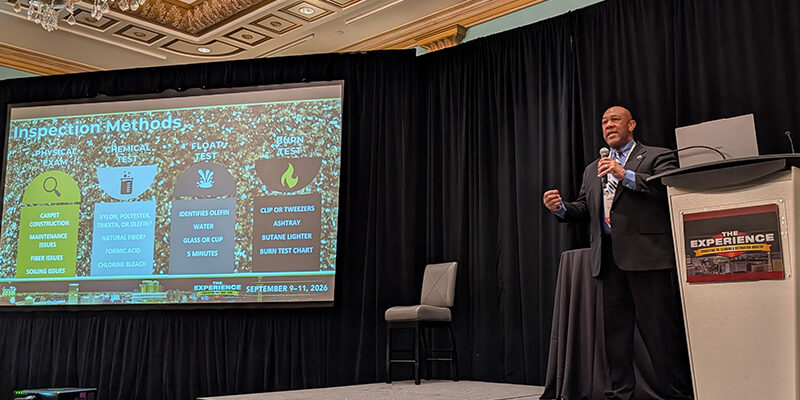
My work in this industry has spanned more than 30 years across training, standards development, technical application, project review, expert analysis, and industry advocacy. I have had the opportunity to teach and consult with thousands of restoration professionals, contribute to published industry standards and resources, and serve in standards-related roles, including chair of the ANSI/IICRC Standards Committee and vice chair of the ANSI/IICRC S500 Standard for Professional Water Damage Restoration.
My new consulting firm, Burton Indoor Environmental Consulting (BIEC), has operated for four years, providing analysis and expert testimony for restoration projects and legal proceedings in several areas across restoration, including patent litigation, risk management, dispute resolution, and project review. Moving into full-time operations allows me to expand that work with a clear emphasis on technical truth, transparency, and professionalism in mitigation and disaster recovery.
The Restoration Pulse: Technical truth and transparency
This column will be dedicated to bringing you the technical truth, unfiltered. We will address and dispel the myth from reality, regardless of drying method, equipment choice, or claim procedure, to promote transparency in restoration decision-making. Water damage restoration often requires judgment under pressure. Restorers must evaluate the source and extent of water intrusion, potential contamination, affected materials, building conditions, occupant considerations, safety concerns, drying feasibility, demolition decisions, and documentation requirements. Those decisions can affect health, property value, project cost, customer trust, carrier relationships, and legal defensibility.
Technical truth is not an abstract principle. It shows up in the inspection, the work authorization, the moisture map, the category and class determination, the daily monitoring log, the change order, the communication with the customer, the invoice, and the explanation of why a material was dried, removed, cleaned, protected, or left in place. When that information is clear and well supported, it strengthens production quality and reduces conflict. When it is vague, incomplete, or inconsistent, it creates risk and can drive up cost and accounts receivable.
Transparency in the technical truth creates a common language. Property owners want to understand what happened and what must be done. Adjusters need reliable evidence to evaluate scope. Indoor environmental professionals need accurate context for assessment and remediation decisions. Attorneys and experts need a clear record when disputes arise.
Each article in The Restoration Pulse will:
- Make technical language part of your daily operations. Drive consistency and accuracy in the language you use for categories of water, classes of water intrusion, material conditions, drying goals, equipment placement, and monitoring results.
- Strengthen documentation systems. Give you tools to build workflows that capture inspection findings, photos, moisture readings, psychrometric data, scope decisions, customer communications, and project changes as the work progresses.
- Help you use standards as operating tools. Distil Standards and other recognized guidance documents into operational procedures for field execution, not just references that only matter when a dispute occurs.
- Improve your internal quality control. Present methods to review your completed projects for consistency between initial findings, scope, daily logs, final readings, billing, and customer communication.
- Address your internal training efficacy. Present simple, practical training methods and tools to help technicians understand the “why” behind monitoring, g equipment, removing materials, controlling humidity, and client communication best practices.
- Communicate the value of technical truth. Above all else, present you with the technical truth. Clear, unbiased, and unfiltered.
What’s coming on The Restoration Pulse?
Through the next several months, The Restoration Pulse will cover a broad range of topics in the cleaning and restoration industry. Here’s a list of what we’re planning:
- Wildfire: Clearing the Smoke
- AI: Creating Value and Avoiding Risk
- Inspection and Monitoring: Quality vs Quantity
- Stabilization: The Critical First Step in Mitigation
- Preliminary Assessment: Managing Risk
- Equipment Deployment: Precision and Concrete Justification
- Job Completion: Documenting the Finish Line Effectively
I hope this new technical touchpoint will be of great benefit for all professionals within the cleaning and restoration industry.

Brandon Burton
Brandon Burton, a longtime industry advocate, trainer, and standards volunteer, brings more than 30 years of experience on the technical side of the restoration industry. He is an approved IICRC instructor and a published author in the field. Burton currently serves as chair of the ANSI/IICRC Standards Committee and vice chair of the ANSI/IICRC S500 Standard for Professional Water Damage Restoration.