Build a Legacy Worth Leaving Behind
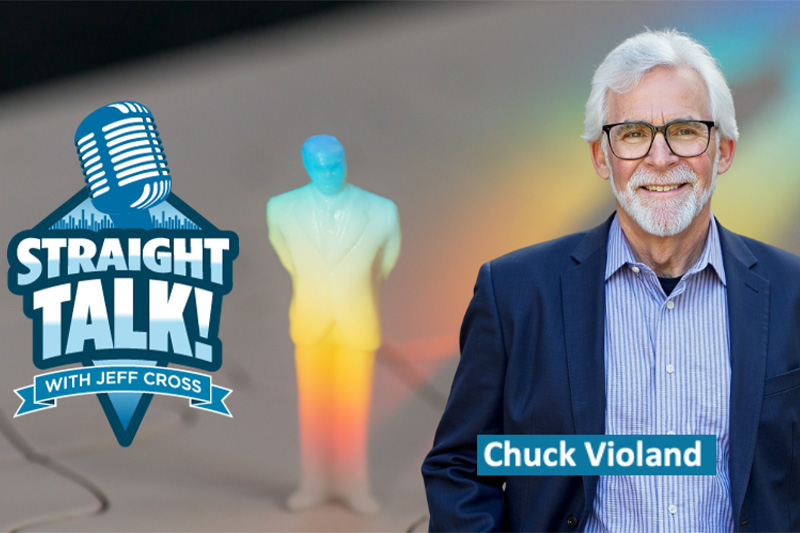
When Chuck Violand talks about legacy, he’s not talking about plaques on a wall or a name on a building. He’s talking about something quieter—the way people remember how you led, how you treated them, and whether your presence made them better.
Violand, founder of Violand Management Associates (VMA), has spent decades coaching cleaning and restoration business owners, and recently brought that perspective into sharp focus.
The here and now vs. the long haul
Most business owners, Violand said, don’t spend much time thinking about legacy—and that’s understandable. “There’s bills to be paid, customers to be served, payrolls to be met,” he said. “These things happen on a day-to-day basis.” But he argues that keeping at least one eye on the long view changes how you approach those daily decisions.
He framed it with a climate analogy: your values and vision are like the climate—slow to form, slow to change, but foundational. Your daily decisions are the weather—shifting constantly but always shaped by that underlying climate. “Our legacies are usually the result of a big event,” he said. “Rather, they’re built one decision at a time, one small interaction at a time, over a lifetime or a career.”
‘It’s not personal, it’s just business’
Violand didn’t mince words about what it actually means to put people first. He recalled seeing a T-shirt in an airport that read, “It’s not personal. It’s just business.” His reaction? “That’s about the biggest bunch of nonsense, especially in small businesses where it is all about people.”
In practical terms, he said, leading with people in mind looks expensive up front—but brilliant in the long run. It means taking time to understand what motivates someone rather than dismissing them as lazy. It means investing in development rather than cycling through employees and absorbing the cost of constant turnover. And it means getting out of your own way. “Letting others step up into leadership roles, even on a small scale” is part of the picture, he said.
Build for the long haul
Whether you’re early in your career or closer to the end of it, Violand’s advice is the same: take the longer view. He acknowledged that business operators are conditioned to think short-term—finishing a job, collecting a payment, making payroll. “I’m not suggesting that we don’t do those things,” he said. “What I am suggesting is that we don’t only do those things.”
To make the point, Violand reached back about 900 years. Notre Dame Cathedral in Paris—the one that burned and has since been restored—was started in 1163 and
completed in 1345: 182 years of construction across multiple architects and several leadership changes. “Yet they built something that had a lasting legacy,” he said. The scale is different, obviously. But the principle holds. “Don’t just look at the big things. Look at the everyday things, because that’s what’s building your legacy.”
It’s a quieter kind of ambition—but for Violand, it’s the one that lasts.
Watch the interview and listen to the podcast:
For more video content by Cleanfax, check out the Cleanfax Video page and start learning invaluable cleaning and restoration tips today.
Subscribe or update your subscription to Cleanfax.
Become an ISSA member to manage and grow your restoration company
ISSA membership provides unparalleled opportunities to improve your operations, boost your profits, and make valuable connections. Learn more about the benefits that are in store for you as an ISSA member by viewing the ISSA membership form page today!

Jeff Cross
Jeff Cross is the ISSA media director, with publications including Cleanfax, Cleaning & Maintenance Management, and ISSA Today, as well as multimedia programs such as Straight Talk! and Take 5 With Cleanfax in video and podcast format. He can be reached at [email protected].