Attestation Becomes Mold Remediation’s New Watchword
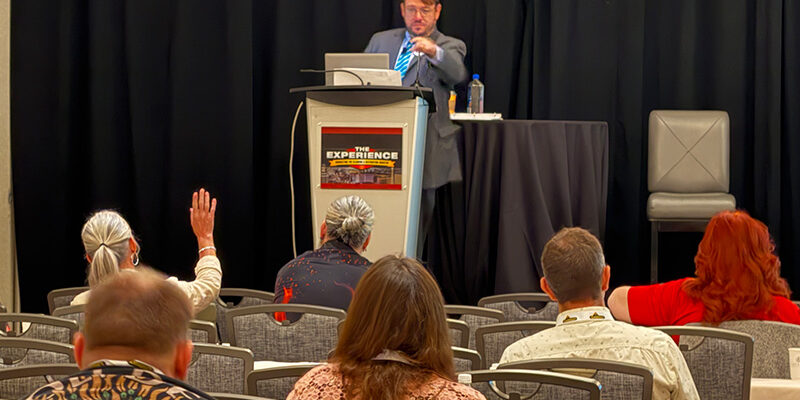
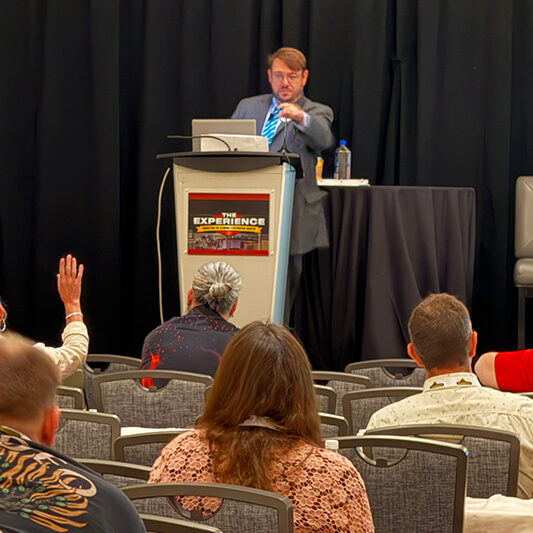
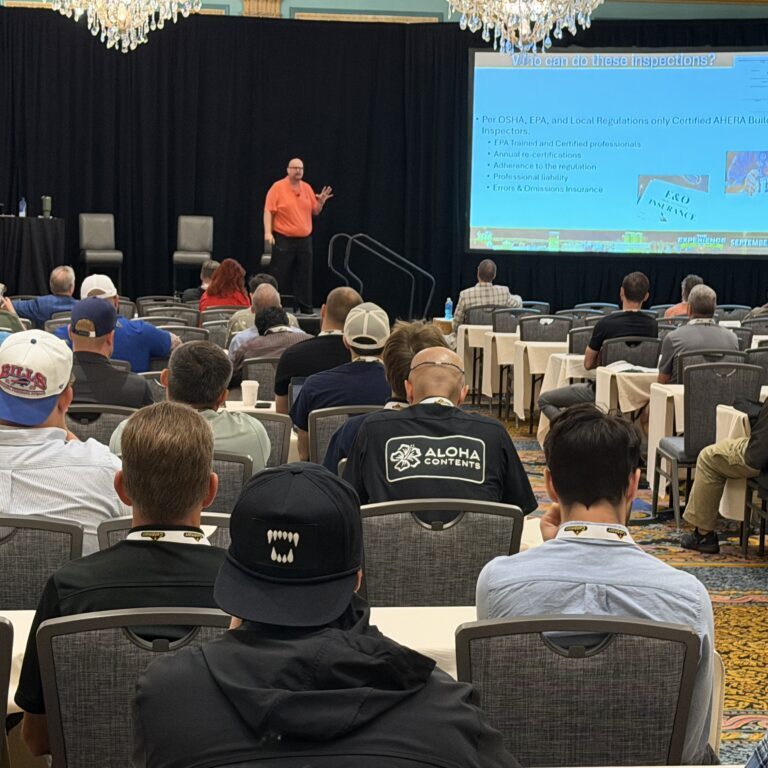
When Doug Hoffman, executive director of NORMI, the National Organization of Remediators and Microbial Inspectors, and Dr. Gavin Macgregor-Skinner, senior director at ISSA and NORMI Presidential Council medical advisor, talk shop, the conversation often naturally segues to mold remediation, including assessment, execution and documentation.
Recently, though, they have shared emerging information on a word rarely used in the industry: attestation.
A new word enters the vocabulary
Macgregor-Skinner broke the contractor’s career into three stages. Education means learning the material. Certification proves a person knew the material at one point in time, when the test was taken. Attestation goes further: A contractor signs a statement confirming that a specific job, on a specific date, followed a specific protocol.
That distinction, he said, is now written into law. Hoffman and Macgregor-Skinner have spent two-and-a-half years working alongside 19 other organizations on legislation at the state and federal level built around the concept. Connecticut passed a mold remediation law taking effect Oct. 1 that requires contractors to be certified through the IICRC or NORMI and to attest, in writing, that a job was completed correctly. The word attestation appears directly in the statute.
Hoffman described the run-up to that law as unexpectedly personal. A meeting scheduled with two state officials in Connecticut drew seven, including the state’s consumer protection commissioner, who invited Hoffman onto a state board days later.
Legislation is catching up fast
At the federal level, Hoffman and Macgregor-Skinner are pushing the MOLD Act—the Military Occupancy Living Defense Act—as an amendment to the National Defense Authorization Act. The measure has passed the House and would require contractors certified through the IICRC, NORMI or ACAC to perform mold remediation in privatized military housing, with the work documented through a certificate of sanitization or decontamination. Hoffman put the scale of the problem at more than 200,000 mold-contaminated military homes nationwide, all of which would need pre- and post-remediation assessment if the bill becomes law. California and Illinois are considering similar legislation, and roughly seven other states are watching the outcome, according to Hoffman.
Eight steps toward defensibility
The presenters outlined an eight-part framework for building a case file that holds up under scrutiny. Every job starts with an assessment, without assumptions. Contractors follow a defined pathway rather than sampling wherever seems convenient. Occupant susceptibility can change how an assessment proceeds. The presence of mold doesn’t automatically mean exposure, and exposure doesn’t automatically mean a health impact. Subjective observations get separated from objective, lab-verified data. Investigators keep their findings unbiased. And documentation, Macgregor-Skinner said, is a contractor’s strongest form of protection when a job is questioned later.
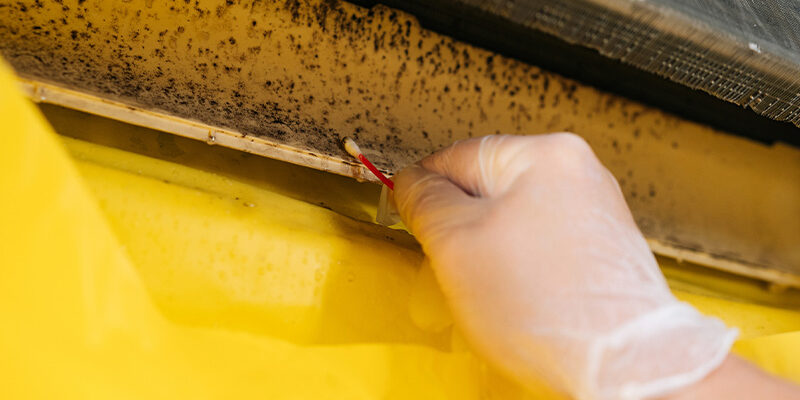
The presenters illustrated the risk of relying on appearance alone with a story from a televised segment years ago, in which an assessor looked at a patch of mastic—a construction adhesive—and declared it mold on sight, quoting the homeowner US$25,000 for remediation that wasn’t needed. Lab testing is what catches that kind of mistake, they said, and it’s why NORMI treats sampling as confirmation of a finding rather than the finding itself.
NORMI’s Level Four Protocol, which the organization has positioned as a best-practices companion to the IICRC’s S520 standard, is meant to give contractors that repeatable process. Following a written protocol, Hoffman said, also shifts liability away from the individual contractor and onto the standard itself.
A growing sensitized population
Hoffman traced NORMI’s current direction back to 2021, when he and Dr. Michael Pinto built a certification track for working with environmentally sensitized clients, a population Hoffman estimated at 25% to 30% of the general public. “Those folks have a lot of people involved in their lives—doctors, emotional health providers, medical people, financial people,” Hoffman said. “Our side is the environmental side. That’s what we do.”
NORMI has since built out a Medical Advisory Board chaired by Dr. Andrew Heyman, a protege of Dr. Ritchie Shoemaker who runs resources for healthcare providers at beyondmold.com. The organization also launched a certification at George Washington University focused on mold illness, intended to help remediation professionals speak the same language as the physicians treating sensitized clients, without positioning contractors as medical providers themselves.
Industry groups choose collaboration
Hoffman and Macgregor-Skinner also announced a new Restoration Advocacy Coalition, formed within the past two months, bringing together the IICRC, the Restoration Industry Association, NORMI, the Change the Air Foundation and ISSA. Macgregor-Skinner called the arrangement a departure from an industry that has historically operated in silos, describing it instead as a shared effort among groups that each bring something different to the table.
The presenters closed with figures meant to frame the size of the opportunity: an estimated 140 million buildings exist in the United States, about 95 million of them occupied by people who sleep there at least eight hours a night, and roughly 47% of buildings nationwide have some form of moisture problem. That works out to tens of millions of structures that may eventually need the kind of assessment, remediation and documentation NORMI is building its protocols around.
As the Connecticut law and the MOLD Act move toward implementation, Hoffman and Macgregor-Skinner told the room the days of relying on a technician’s word are ending. The expectation going forward, they said, is a written record a contractor is willing to sign.

Jeff Cross
Jeff Cross is the ISSA media director, with publications including Cleanfax, Cleaning & Maintenance Management, and ISSA Today, as well as multimedia programs such as Straight Talk! and Take 5 With Cleanfax in video and podcast format. He can be reached at [email protected].