Crime Is Down. Cleanup Isn’t.
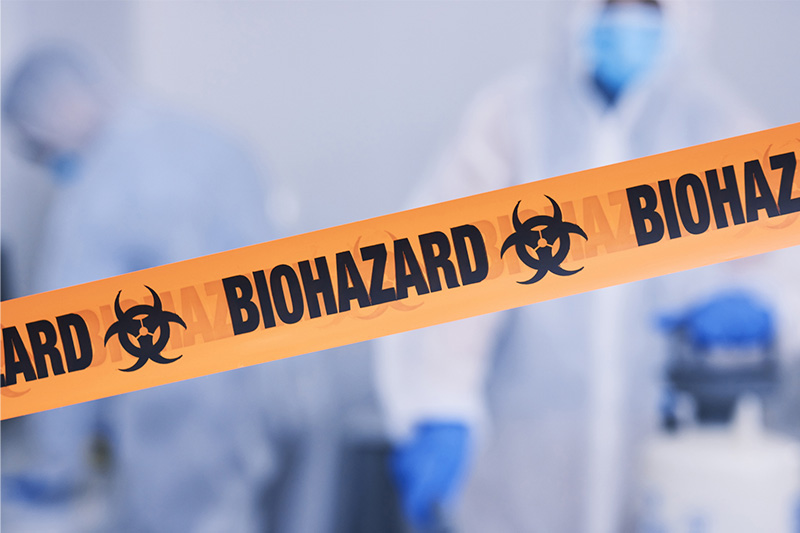
Before I worked in biohazard cleanup, I wore a badge as a police officer in the St. Louis suburbs. The public’s view of a scene depended on the story behind it. A homicide was a crime, an unattended death was a tragedy and a hoarding house was just a mess. Yet, from the outside, the cleanup looked the same: a van, people in Tyvek® suits and biohazard bags.
But the truth is, biohazard cleanup isn’t always the same kind of work, and it doesn’t follow crime trends.
The FBI’s 2025 Reported Crimes in the Nation statistics are real. Violent crime fell an estimated 9.3% from 2024. Murder and nonnegligent manslaughter fell an estimated 18.1%. The murder rate of 4.1 per 100,000 is tied with 1955 and 1956 for the lowest since the bureau started making national estimates.
That’s good news, and I welcome it. But it doesn’t mean we get fewer cleanup calls.
More than just crime scenes
Most of our jobs aren’t the dramatic crime scenes you see on TV. It is an unattended death in a one-bedroom apartment that sat for two weeks in August. It is a suicide in a guest room. It is a hoarding house where Adult Protective Services (APS) finally got a warrant. It is drug-contaminated rentals where fentanyl dust lingers on floors, vents and even children’s toys in the closet. These situations don’t show up in official crime stats, but they demand cleanup—and that falls on us, not the police.
The Centers for Disease Control and Prevention’s (CDC) final 2024 mortality data included 48,824 suicides. Suicide was the 10th leading cause of death in the United States. Drug overdose deaths fell a lot, 26.2% from 2023, and still landed at 79,384. Those people died at home more often than they died in a nightclub parking lot. Someone has to restore those homes and make them safe and livable again. That someone is us.
I started T.A.C.T. (Trauma and Casualty Team) after years in law enforcement and biohazard restoration. We’ve been featured on the A&E show Hoarders and in Esquire Magazine, highlighting that this work isn’t just crime scene cleanup. The work continues even as crime drops, because it’s bigger than crime alone.
Two pipelines, one van
There are two main cleanup pipelines: those covered by insurance and those that aren’t.
Insurance will usually pay for a trauma or unattended death that is sudden and/or accidental. Hoarding cases are a different animal. It is often a health department or family problem, not a covered peril. Crews get burned when they treat those as the same ticket. You may scope it wrong, staff it wrong and try collecting from the wrong people. Treating all jobs the same risks staffing errors and payment issues.
If you work in restoration, you know the ropes for fire and water damage. Biohazard cleanup seems like a specialty add-on until you face an unattended death that hits a vinyl-plank floor or a particle-board dresser, or fentanyl contaminating an HVAC system. That’s when your team needs proper bloodborne pathogen training, the right protective gear and certified waste disposal—not just a YouTube tutorial.
S900 is not a blood scene
On Sept. 18, 2025, the Institute of Inspection, Cleaning and Restoration Certification (IICRC) announced the publication of a new American National Standard—ANSI/IICRC S900 Standard for Professional Remediation of Precursors, Drug Residues, and Associated Chemical Waste.
It is not a blood standard. It is the first American National Standard for cleaning sites contaminated by drug residues, precursors and the chemical waste that comes with them.
A suicide with blood on drywall is a bloodborne job. A bedroom where somebody smoked fentanyl for six months is a chemical job. Mixing those in your head is how techs get hurt and how you can get sued. S900 covers site characterization, exposure levels, documentation, structural and contents remediation and post-remediation. Fentanyl and carfentanil manufacturing and distribution sit at the top of that risk stack. If you are still quoting “crime scene cleanup” as one line item for every overdose house, you are behind the standard.
Most states lack laws about cleaning fentanyl residues, so operators guess about safety and cleanup. S900 gives you a clear, defensible standard to follow when landlords, insurers or inspectors ask what “clean” means.
What OSHA actually said
Another common myth I often hear on job sites is that every suicide cleanup requires 40-hour Hazardous Waste Operations and Emergency Response (HAZWOPER) certification. That is not what the Occupational Safety and Health Administration (OSHA) wrote.
OSHA’s Bloodborne Pathogens Standard, 29 CFR 1910.1030, applies when your people have occupational exposure to blood or other potentially infectious material. So do personal protective equipment (PPE), respiratory protection and hazard communication. HAZWOPER, 29 CFR 1910.120, is a different box.
In a Dec. 15, 2020, letter of interpretation, OSHA clarifies that if a biohazard contractor is not doing emergency response or post-emergency cleanup of a declared emergency, and the crew shows up after emergency workers have left, that contractor is not under HAZWOPER just because the job involves blood. They still have to follow the standards that do apply.
Read the letter before you put HAZWOPER on a flyer as if it is a license to clean a bedroom. Training is not a slogan. Match the standard to the hazard.
Advice to operators
What I tell operators is simple: don’t sell using the term “crime scene” if most of your jobs are unattended deaths, suicides, hoarding or residue cleanups. Be honest about the mix. Police, medical examiners and APS already understand the difference, and your customers should too.
Keep owners or trained managers involved in every call. This work often happens at odd hours for grieving families. A scripted call center won’t build trust, win jobs or help your reputation.
Separate the insurance-covered pipeline from the non-insured hoarding cases. Trauma is often a claim. Hoarding usually is not. Bid them that way.
Invest in S900 training and stop treating fentanyl contamination like a blood cleanup with extra disinfectant.
If you come from water and fire restoration, get bloodborne pathogen and chemical safety training before taking biohazard calls.
The fact is this: People will keep dying at home, and while crime stats can improve, the cleanup work will stay. The category is bigger than a headline about crime.