The Death of Random Acts of Marketing
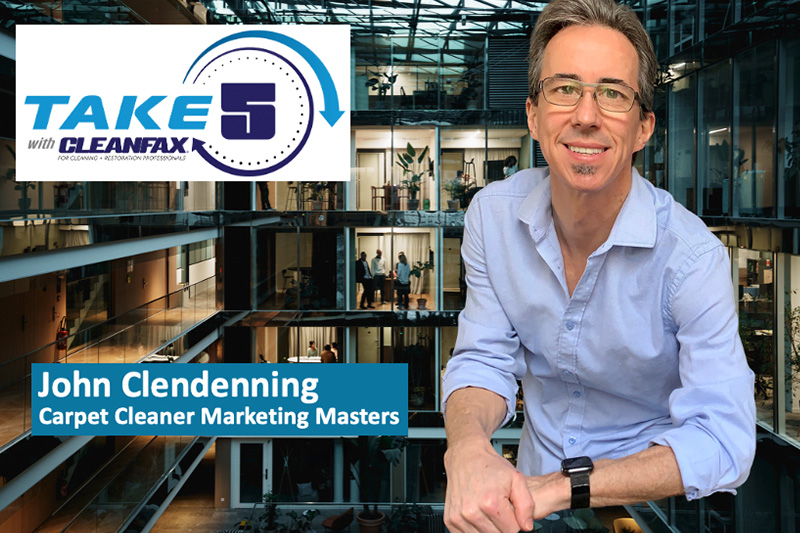
If your marketing strategy feels like just trying things out and hoping something works, you’re not alone.
But that guessing game can stall a business fast, said John Clendenning, founder of Carpet Cleaner Marketing Masters. He has been in the industry for 30 years and has spoken to thousands of carpet cleaners.
Over time, he has noticed a clear divide between the small percentage that build large, well-run companies and the much larger group that is still “trying to figure it out.”
“It’s down to less than 0.03% make it to a million dollars and only about 15% or above half a million,” Clendenning said. “Everything else is below that.”
The difference, he said, comes down to structured, layered marketing—not random bursts of activity. “You need 20, 30 poles in the water, 20 or 30 different ways, and sometimes 40 ways that generate one, two, three, four, five new inquiries a month,” he explained. “Because the goal of our industry is not one-time transactional customers, but long-term repeat clients. That’s where all the money lives.”
Clendenning said relying on a single source of leads—whether it’s Facebook ads, postcards, or word of mouth—is a red flag. “If you find that all of your new clients are coming from word of mouth, that’s a warning sign to me,” he said. “It’s nice to be known in the marketplace, but we as humans, we don’t remember everybody.”
The real key, he said, is stacking marketing systems that work together. “Get this, lock it in, it does its thing, keep an eye on it—three to one, four to one ROI—next, next,” he said. “You lock and load, get things as automated as possible, and then add the next. If you’re not adding but just transferring, you’re basically repeating the same thing repeatedly.”
Clendenning calls this the “growth cycle”—learning to market first, then scale operations, and finally manage data and finances. “A lot of people get stopped at that first part because they think marketing is an expense and something you have to do, but they wish they didn’t,” he said. “And it isn’t. It’s the core of how you grow a business.”
So how do you make marketing enjoyable—and sustainable? “Start with your foundation,” Clendenning said. He outlined four elements every small business needs to build before launching big campaigns:
- A compelling sales proposition: “If you don’t have one, you’re a commodity.”
- A guarantee that reverses the trust: “Everybody goes, ‘Oh, I’m going to get screwed over.’ Yeah, once or twice every decade, you will. The rest of the time, you’ve just made hundreds of thousands of dollars or more because you have a better guarantee.”
- A founder’s story: “You started this business for a reason. Tell that everywhere,” he said. “Was it because your daughter had allergies? Because your dad ran this business in the day? Tell that story—people learn by stories.”
- Impactful branding: “What do you want your brand colors and feel to look like? Don’t just haphazardly build a cheesy logo. Actually think it through.”
Once those foundations are in place, he said, “you can find the right people to take that and expand it on your social, on your website, in the marketplace—and go to the beach and hang out while the marketing’s working for you.”

Cleanfax Staff
Cleanfax provides cleaning and restoration professionals with information designed to help them manage and grow their businesses. https://cleanfax.com/