Why Claims Often Fall Short Before Restoration Even Begins
When disaster strikes, most homeowners focus on repairing visible damage. Yet the real challenge is restoring what’s inside the home—the personal belongings that make up daily life. Too often, people underestimate their possessions’ true value until it’s too late, leaving them underinsured and unprepared when it matters most. The following Q&A, with Chris Clever and Jason Bohnet, multi-location franchise owners and entrepreneurs based in Austin and College Station, Texas, covers common pitfalls in home inventory, insurance coverage, and steps homeowners can take to protect their property and peace of mind. They operate four Blue Kangaroo Packoutz locations across Texas and Oklahoma, serving the Austin, Houston, San Antonio, Waco, Oklahoma City, and Tulsa markets. In 2025, they were recognized as the Blue Kangaroo Packoutz Franchise of the Year at BELFOR Franchise Group’s annual conference.
Cleanfax: Why do homeowners often underestimate the true value of their belongings, and how can they recognize this gap?
Clever: Homeowners often only think of their belongings in “big ticket” terms. It’s easy to think about TVs and furniture. Still, the significant value is really the sum of all those smaller items that don’t come to mind immediately — from kitchen gadgets and closets full of clothes to kids’ toys and garages full of tools. Those things add up quickly and are often worth far more than the big-ticket items themselves.
A simple exercise: go room by room, open every drawer and closet, and ask yourself, “What would it actually cost to replace all of this?” Most homeowners are genuinely surprised by that number. And unfortunately, so are their adjusters — usually after a loss has already occurred.
Cleanfax: What types of items are most commonly overlooked when homeowners assess everything inside their home?
Bohnet: Homeowners most often overlook the items they interact with every day. Children’s books and toys, home office supplies, pantry staples, small kitchen appliances, and lawn and garden equipment—none of these feel significant on their own. Still, together they represent real value that rarely gets documented.
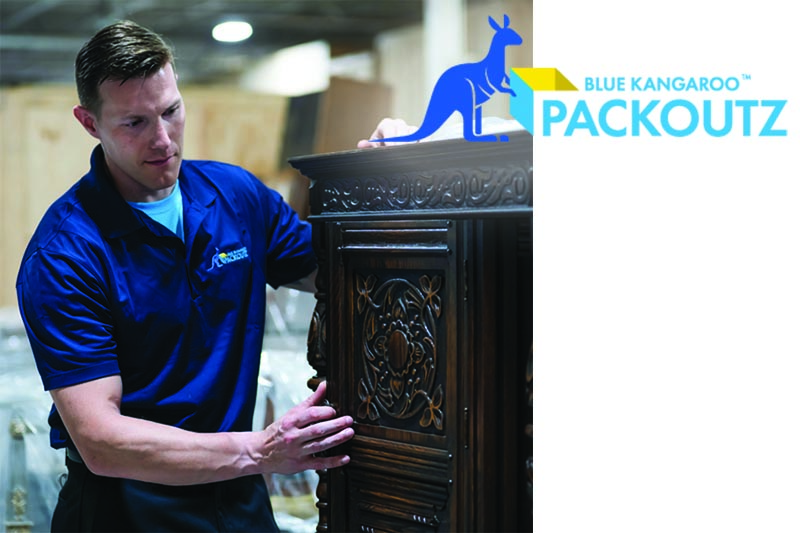
Beyond the purely functional, many homeowners also overlook sentimental and irreplaceable items. A dining room table passed down through three generations carries far more value than any “reasonable substitute” replacement would reflect — and more importantly, it may be restorable rather than replaceable. That distinction matters enormously when it comes time to file a claim.
Cleanfax: How does undervaluing contents affect the insurance claims process after a storm?
Clever: The problem often starts before you file a claim. Many homeowners unknowingly undervalue their contents coverage—choosing lower policy limits because the premium difference seems modest —without realizing what that gap means when a loss occurs.
Compounding this, policies that pay actual cash value rather than replacement cost will significantly depreciate belongings —meaning a five-year-old laptop or a well-worn sectional pays out far less than it costs to replace. When those two factors combine—low coverage limits and depreciated payouts—homeowners face painful triage decisions in an already stressful situation: what’s essential to replace, and what do we absorb as a loss?
That’s the opposite of what insurance is supposed to do. Coverage that actually performs when you need it starts with understanding what you own and making sure your policy reflects it.
Cleanfax: Why does a lack of a clear home inventory slow down the contents restoration process?
Bohnet: Without a clear inventory, the entire claims process becomes a negotiation over things that shouldn’t have to be negotiated. The homeowner tries to recall items from memory under stress, the carrier has no baseline to work from, and the restoration team spends time establishing what existed rather than focusing on what can be saved.
Documentation removes that friction. When every item is cataloged with photographic evidence, condition notes, and verifiable replacement pricing before a loss occurs, the conversation shifts from debate to execution. Claims move faster, disputes are minimized, and the homeowner spends less time fighting for what they’re owed and more time getting their life back in order.
A pre-loss inventory isn’t just paperwork — it’s the foundation that makes everything else in the claims and restoration process work the way it’s supposed to.
Cleanfax: What steps should homeowners be taking now, ahead of storm season, to better prepare for potential damage?
Clever: Know what you own. Just as businesses periodically account for assets on their balance sheet, homeowners should do the same —especially before major storm seasons and ahead of insurance renewals.
Our recommendation: grab your smartphone and do a room-by-room video walkthrough of your entire home. Use the video function and narrate as you go — open the drawers, describe what’s inside, call out any sentimental items by name. Verbalize it. Then store that video in the cloud, not just on your phone.
And don’t stress about the state of your drawers. We’ve seen it all — a messy kitchen drawer documented on video is infinitely more useful than a spotless one that was never recorded.
For higher-value items — and we mean value in every sense, not just price — keep digital copies of receipts, appraisals, or any third-party valuations as you acquire them. Store those in the cloud as well. This documentation will help you and your adjuster immensely if you ever need to file a claim.
Cleanfax: How detailed does a home inventory need to be to support an insurance claim effectively?
Bohnet: Not every item in your home needs the same level of documentation—but for anything with significant value, whether based on price or personal importance, the bar should be higher.
Here’s a useful way to think about it: imagine you’re selling that item on a resale marketplace. Photos and video help, but a serious buyer would want more — how old is it, what did you pay, is there a serial number or original receipt that confirms its legitimacy? That same logic applies to your home inventory.
You don’t need that level of detail for a box of paper clips, but you absolutely do for the luxury desk they sit on.
Cleanfax: What are the most common mistakes homeowners make when documenting their belongings?
Clever:The most obvious mistake is simply winging it. “I’ll remember everything if something ever happens” isn’t the line you want to say when you’re sitting across from an adjuster.
For those who do take the time to document, the most damaging mistake is storing everything locally. When catastrophes hit, they hit everything—your belongings, your home, and the devices you used to document them. If your inventory only exists on a hard drive or a phone that’s now underwater or burned, you’ve lost your evidence at exactly the moment you need it most. Cloud storage isn’t optional — it’s the whole point.
Beyond that, poor photo and video quality is more common than you’d think. If an image is too dark or too cluttered to identify the item, confirm its condition, or establish its value, it may as well not exist. Take an extra thirty seconds per room to make sure what you’re capturing is actually usable.
Cleanfax: How can contractors and restoration professionals help homeowners better prepare before severe weather occurs?
Bohnet: Benjamin Franklin once said, “By failing to prepare, you are preparing to fail” — and few situations prove that more clearly than a catastrophic loss.
Restoration professionals and referral partners have an opportunity to be genuinely proactive here, not just responsive. Start by giving homeowners educational resources like inventory templates, documentation checklists, and plain-language guidance on what carriers actually need to process a claim. Simple tools like these, shared by insurance agents, property managers, or at community events, can surface coverage gaps before a storm arrives and give homeowners time to address them.
For homeowners who want a more comprehensive approach, Blue Kangaroo Packoutz offers professional inventory management services—a documented, photographed, and valued record of your home’s contents, paired with a preparation plan tailored to your situation. We’ve seen firsthand the difference it makes when a homeowner enters the claims process with that foundation already in place. The restoration moves faster, the claim settles more smoothly, and the homeowner gets their life back sooner.
Preparation isn’t just good advice. In our business, it’s the difference between a difficult chapter and a devastating one.