Independent, Not Isolated
Independent restoration companies make up a large share of the industry, and many of them operate without the corporate support, shared systems or national network a franchise brand provides. For the Restoration Industry Association (RIA), that gap is the reason its work for independents has become a priority. Earlier this year the association launched its Voice of the Independent Task Force, an advisory group meant to make sure the independent perspective shapes RIA strategy.
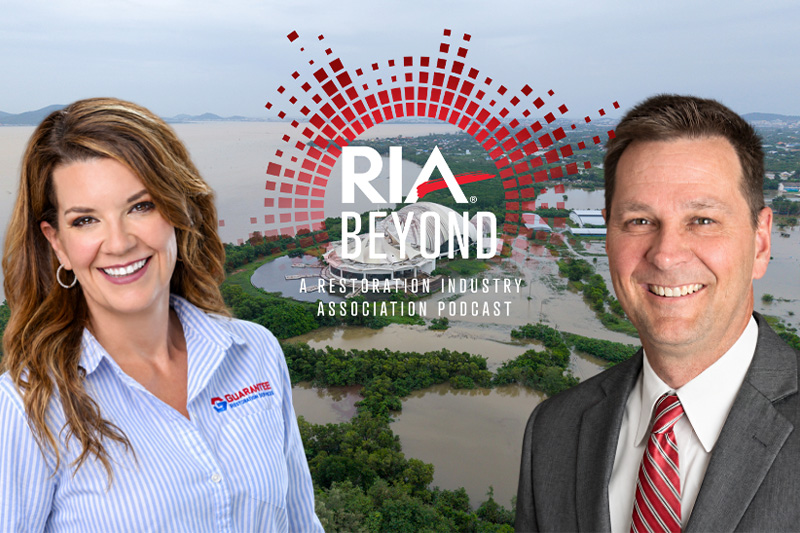
Two volunteer leaders who run independent companies themselves see the effort from both sides. Jim Kowalski is a partner at Kowalski Construction, a family-owned restoration company in Phoenix that turns 60 next year. He has worked there full time for 47 years, is a former president and current board member of Restoration Affiliates and serves on RIA’s independent task force. Marcie Richardson is chief operating office of Guarantee Restoration Services, which operates seven locations from Texas to Alabama, and serves as vice president on the RIA board of directors, chairing both the Membership Committee and the Voice of the Independent Committee.
The same tools, more at stake
Kowalski said RIA serves independents in largely the same ways it serves every member company.
“The RIA is supporting independent companies in very much similar ways that they support all of the companies, through advocacy, education, standards, best practices, even business development,” Kowalski said.
The difference, in his view, is how much those services matter to a company with nothing bigger standing behind it. Independents “don’t necessarily have the same structure and network to help support them that some of the other franchise non-independent companies do,” he explained.
Richardson framed it around voice and representation.
“Supporting independent restorers means that we’re making sure that they have a voice,” Richardson said. “They have resources, education and representation that they may not be able to create on their own … Even though we’re independent doesn’t mean that we’re isolated.”
Squeezed from both ends
Pricing pressure from insurance carriers tops the list of concerns Kowalski hears from other restorers. Costs keep climbing, with fuel a particular worry, while carriers push to hold pricing tight.
“We’re getting it from the top down and the bottom up,” Kowalski said. “So there’s the independent restorer in the middle and he’s trying to negotiate his costs as well as his retail, and there isn’t a whole lot of room for margin there.”
RIA is pressing the issue through advocacy and through difficult conversations with insurance carriers, he added. Still, the resource he values most isn’t a program.
“The biggest resource, in my opinion, is the other independent restorers that are going through the exact same situation that they are,” Kowalski noted. “We’re all in this together.”
Richardson pointed to how individual frustrations add up.
“When one contractor has experienced an issue, it can feel like an isolated problem,” she said. “But when hundreds of companies are experiencing the same thing, the industry has a problem.”
A seat at the carrier’s table
Kowalski considers RIA’s white papers one of the association’s most underused tools. He learned their value when new leadership from a major insurance carrier came to his market and sat down with his company to talk about pricing.
“We were really stunned that someone at that level wasn’t more familiar with the realities of what a restoration contractor deals with,” Kowalski said. “In order to gain credibility and to show that it wasn’t simply our point of view, we utilized the white papers from the RIA.”
The carrier didn’t come around completely. Kowalski admitted the documents weren’t embraced wholeheartedly, though they changed the footing of the meeting.
“It gave us a little bit of an edge that we didn’t have prior to that conversation,” he said. “It opened the door somewhat for us to be able to leverage not our position, but a position from the industry.”
The value of a phone call
Richardson said the RIA network itself is easy to overlook, even though it may be the most valuable thing members get. A quick call to another independent owner often reveals whether a problem is local or widespread.
“Sometimes advocacy starts with one contractor asking another contractor, ‘Are you seeing this too?’” Richardson said.
Kowalski agreed and took the point further. Restoration has always been a fragmented industry, he said, and independents are even more scattered.
“We’ve got a fragmented segment of a fragmented industry,” Kowalski said.
Many independents are small shops with phones ringing, leads coming in and sometimes a storm response underway, which leaves little room for association involvement. When they do make it to a conference, they often don’t know anyone at first. That tends to change quickly.
“Once they get into that environment and they realize that, hey, I’m just like everybody else in this room dealing with the same issues … it starts to build the bridges,” Kowalski said. “The conversation can develop and solutions can be had.”
Leaders who run the same jobs
RIA’s leaders are volunteers, and Richardson stressed that most of them go back to their own restoration companies when meetings end. They handle the same customer, employee, estimating, production and cash flow issues as everyone else.
“As volunteer leaders, it’s our responsibility to listen,” Richardson said. “What are members seeing? What’s getting harder? What aren’t we talking about?”
Part of that job is spotting patterns, she noted, such as the same concern surfacing from independent restorers in completely different markets.
Kowalski echoed that. Many of the volunteers are independent restorers themselves, he said, and they are “very open and eager to hear from our independents and what their challenges are.”
Trust has to be earned
Some independents question whether an association can truly understand their day-to-day reality. Richardson called it a fair question, one she sees play out on social media.
“I don’t think RIA should simply ask independent restorers to trust that we understand them,” she said. “We should earn the trust by listening and producing the work that matters to their business.”
That responsibility runs both ways, she added.
“An association can only represent a voice that it hears,” Richardson explained. “Volunteer. Participate. Serve on a committee. Join. Ask for feedback. Come to an AGA event. Come to one of those regional events. Challenge us when it’s necessary.”
AGA refers to RIA’s Advocacy and Government Affairs program, which hosts regional events at member companies around the country.
“RIA is not and should not be an organization that you should belong to,” Richardson said. “It’s something that you need to participate in.”
Kowalski carries that involvement into his own company. After conferences and meetings, he shares what he learned with his staff, forwards RIA emails and gives employees access to the association’s information.
“RIA becomes another tool in our tool belt that we can utilize,” Kowalski said.
Too many names to know
Looking ahead, Kowalski believes success depends on reaching smaller independents. He has tried locally, personally contacting other companies in his market about getting involved with RIA. The effort “pretty much fell on deaf ears,” he admitted.
Phoenix has changed a lot. Kowalski once knew every restoration company in town.
“I don’t even know the companies anymore. They’re on every corner,” Kowalski said.
Stopped at a light recently, he spotted one restoration company’s vehicle in front of him and another beside him. He had never heard of either.
Staying in business for any length of time is rare in restoration, he noted, and he wants RIA to help more independents build companies that last.
“All of us depend on the industry to be strong,” Kowalski said.
Richardson defines a small independent broadly. It might be a two-truck startup, or a group of employees from a company that closed who decide they can run their own shop. By some measures, she added, Guarantee Restoration Services could count as small.
“We have 135 employees. Some may consider us a small restorer,” Richardson said. “Know that RIA is not too big, and you are not too small.”
Her measure of progress comes down to one question: Are independent restorers stronger because RIA exists? She wants to see the association helping owners build stronger, more sustainable businesses.
“Independent restorers and collaboration aren’t opposites,” Richardson said. “We can protect our independent businesses while still coming together around issues that affect us all … If RIA can continue to be the place where that happens, that’s where the progress happens.”

Jeff Cross
Jeff Cross is the ISSA media director, with publications including Cleanfax, Cleaning & Maintenance Management, and ISSA Today, as well as multimedia programs such as Straight Talk! and Take 5 With Cleanfax in video and podcast format. He can be reached at [email protected].