9/11 Air Quality Lessons Learned: Protecting Workers in Today’s Fires
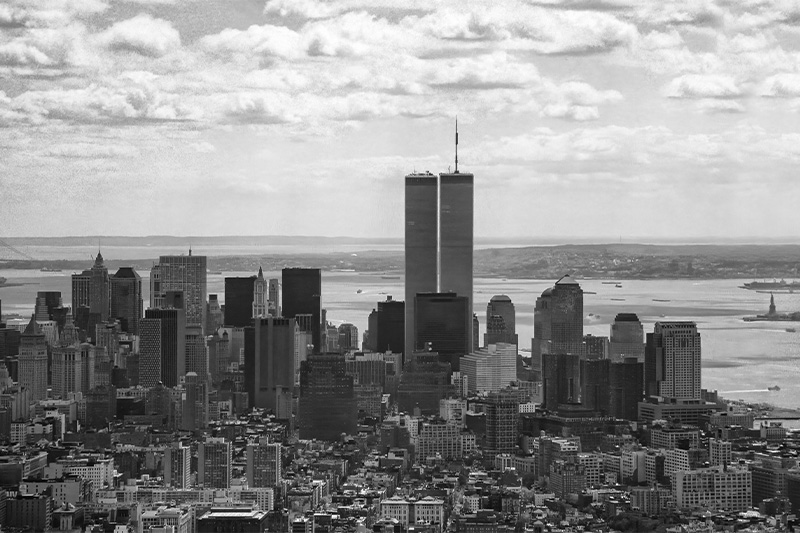
As we mark the 25th anniversary of 9/11, the turning point is an opportunity not only to remember but also to reflect on lasting lessons from the recovery: what a disaster can leave behind in the air and how our understanding of those risks has changed.
First Onsite Property Restoration was part of the restoration industry’s response in New York at the time, as dust, smoke and debris affected properties and communities well beyond Ground Zero.
Twenty-five years later, advances in air quality testing, particulate monitoring, industrial hygiene and restoration practices give us a far better understanding of environmental conditions that may not be visible to the naked eye.
Cleanfax Editor Elizabeth Christenson chatted with Tom Peter, a certified industrial hygienist and member of the regulatory business practice at First Onsite, about the lessons of 9/11, improvements in air quality science and how restoration safety has evolved during the past 25 years.
Peter shared that in the 9/11 tragedy, he lost his best friend in a fire in one of the towers.
“Being in the New York area, we were all impacted,” he shared. “It left ruins and debris, toxic dust flying through the streets, people running, screaming. You see footage of people just covered in dust. When those buildings crumbled, so many things got into the air and onto surfaces.”
When the buildings were pulverized, the fine dust created a combination of hazardous substances in the residue.
“We really don’t always know what’s in that dust, and we didn’t know,” Peter said. “Nobody really knew what that dust was. And even the EPA and all the people who were doing testing at that time didn’t know. We only know that now.”
Since 9/11, extensive studies have been done testing the dust along with doing health follow-ups and risk assessments with the first responders, including with the New York City Fire Department, as hundreds suffered long-term illnesses or died from responding to the 9/11 attacks.
“You don’t know what’s in that building, and it’s important to look at things differently now and see what hazards are there,” Peter explained. “Do an evaluation, and evaluate your risks, and protect your workers. Even all these years later, we’re still learning, and it’s such a tragic loss.”
With an emphasis on safety, the availability of personal protective equipment has helped to protect workers.
“It’s just all about health and safety, protecting workers, doing the right thing,” Peter said.
Safety evolution
During the last 25 years, many changes and developments have occurred in the restoration industry.
“We’ve seen new technology and equipment, sampling instrumentation,” Peter explained. “We’ve even seen changes in our procedures and safety policies. We could see testing equipment that’s out there that’s, like direct reading instrumentation, like particle counts, that could do an assessment of air quality. There are also devices that can tell you if there’s lead and dust.”
Laboratories also have improved their technologies for analysis and turnaround to detect lead particles and different types of gases.
Restoration companies also have extensive safety programs now. At First Onsite, every employee has updated training throughout the year.
“It’s important now also that people have lead training, asbestos training and mold training,” Peter said. “These are all things that are part of our industry now.”
The industry also places greater emphasis on procedures for risk assessments or job safety analysis, which are part of Occupational Safety and Health Administration (OSHA) compliance. Peter also believes that continuing to learn and further training are important, especially in fire situations.
“I think HAZMAT or HAZWOPER training is important to emphasize that there are extreme hazards in our line of work,” he said.
Modern building materials
Peter, who has worked in the restoration and industrial hygiene industries for 30 years, believes older buildings are easier because lead and asbestos were top of mind. New buildings are more complicated because we have more plastics, electronics, synthetic materials, PVC plumbing, foams, and lithium-ion batteries.
“When these things burn, they release toxic compounds and gases,” he explained.
Lithium-ion batteries have changed the industry.
“When there’s a lithium-ion battery fire, that’s extreme,” Peter said. “They call those thermal runaways. Those things burn so intensely. You can’t even really extinguish them. You almost have to let them burn out; try to keep the areas cool around it. But it releases so many toxic compounds like heavy metals and acid type compounds that are dangerous to handle. … Those lithium-ion battery fires are basically a hazmat cleanup, and it should be performed by HAZMAT-trained people.”
Fire departments are now also emphasizing more HAZMAT training for their staff to put out these fires and protect them, ensuring they’re properly equipped and protected for these types of incidents.
Wildfire concerns
For the past several years, the U.S. has seen wildfires impact large areas of the country, as well as smoke from wildfires coming down from Canada. Communities nationwide are now receiving health advisories to stay indoors due to poor air quality.
As the wildfires burn, buildings and cars are also burning, creating more hazards than a brush or wood fire. Peter said the industry, including the Restoration Industry Association (RIA) and the Institute of Inspection, Cleaning and Restoration Certification (IICRC), is working to improve our methods and the safety of our workers when we’re dealing with these wildfires.
“There’s so much that can be done, and the emphasis is on having standard practices, protecting workers, making sure everybody’s safe, everybody gets home safe at the end of the day,” Peter said.