Certified to Advocate: Taking Restoration’s Story to Washington
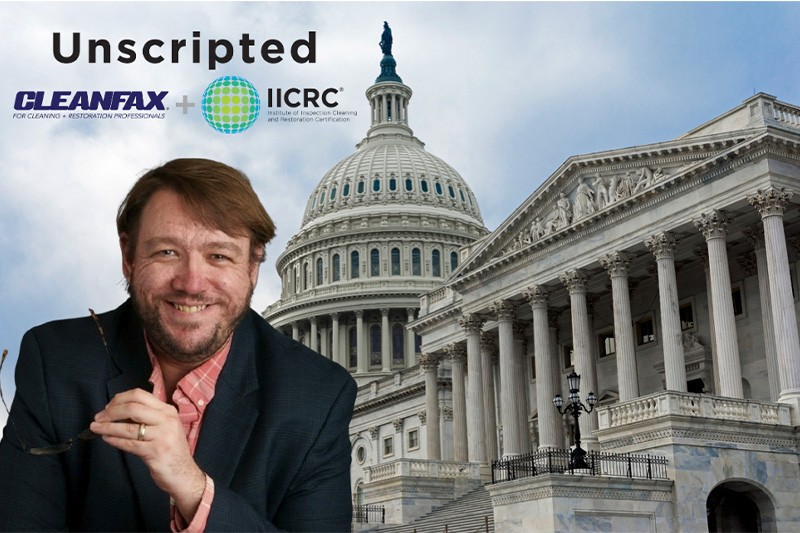
Philip Kahn-Pauli didn’t want to be just another lobbyist walking the halls of Congress on behalf of an industry he’d never worked in.
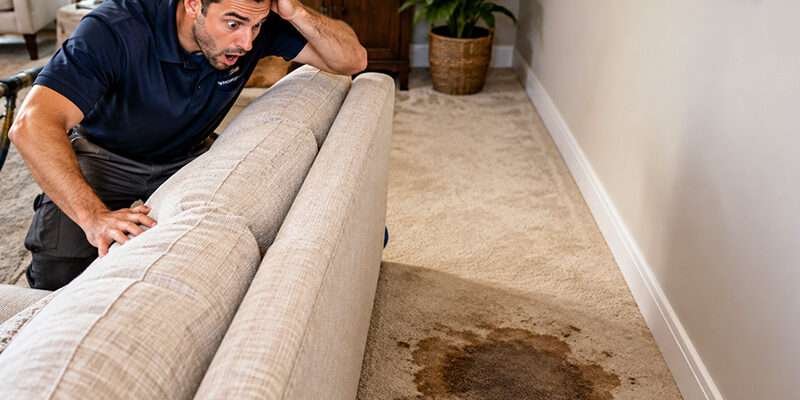
Before he started building relationships with lawmakers as the Institute of Inspection, Cleaning and Restoration Certification’s new Director of Government Relations and Advocacy, he went and got his hands wet. Literally.
Just a few months into the job, Kahn-Pauli has already earned his Water Restoration Technician (WRT) and Applied Structural Drying (ASD) certifications at Reets Drying Academy in Georgia, with an Applied Microbial Remediation Technician (AMRT) certification next on his list. He has also run a legislative fly-in that brought about 70 advocates to Washington, D.C. and represented the industry at a conference of 7,000 state legislators.
“I didn’t want to just be another K Street lobbyist,” Kahn-Pauli said. “I really wanted to get a sense of what it takes to get water out of a house. What does it take to clean a carpet? What does it take to use moisture meters to track drying over time?”
Learning the trade from the flood house
Kahn-Pauli credited IICRC Chief of Staff Holly Kimber with steering him toward hands-on training rather than a desk-only introduction to the industry. “We don’t want you to just be a lobbyist,” he recalled her telling him. “We want you to understand what it means to be crawling into a hot, dusty, dirty and damp crawl space and drying things.”
At Reets, instructor David Hodge walked the class through the material science behind drying and the math behind it—calculating cubic footage, square footage and the number of dehumidifiers a job needs.
“It just made everything click,” Kahn-Pauli said. “I immediately started reading everything I could about the S500, the S520, the S700, all the different certifications, but it didn’t really click in terms of how you deal with different categories of water if you’re cleaning out a house. Actually being there at Reets, seeing what it takes to get water out of hardwood floors, this is what it really is all about.”
He said the class also gave him a look at how varied the people already in the industry are: former firefighters, former Marines, former construction workers, franchise owners required to attend, independent contractors and even a former industrial hygienist picking up a new certification to expand into structural drying.
Turning stories into legislation
That range of backgrounds is central to how Kahn-Pauli wants to do his job. IICRC hosted a two-day legislative fly-in this year that Kahn-Pauli called one of the best he has attended, even though he had only been on staff two months at the time.
Day one centered on preparing advocates: a Certified Firms Roundtable featuring members who had already secured workforce funding or helped pass state legislation, a briefing from a partner organization—the Change the Air Foundation, which advocates for military families dealing with mold in privatized housing—and a training session on what Kahn-Pauli called the “hook line and sinker” pitch: Connect with a staffer’s home geography, then land on a specific ask. Day two sent teams to Capitol Hill offices to make the case in person.
“We’ve actually picked up several co-sponsors for the MOLD Act from the advocacy meetings that we did,” Kahn-Pauli said. IICRC plans another fly-in next year, and he pointed to ISSA’s own legislative event in April as another outlet for advocacy.
A bill with real teeth
Much of that advocacy centers on the Military Occupancy Living Defense Act, known as the MOLD Act, which would set new mold-remediation standards for privatized military housing and allow certified restoration professionals—using IICRC or other recognized standards—to perform the remediation work. Kahn-Pauli said the bill’s most consequential piece may be financial: the federal government could withhold funds from private military housing companies if a unit is found to have unaddressed mold.
Kahn-Pauli is working the issue alongside about 17 other organizations, including the Restoration Industry Association’s Vince Scarfo and ISSA’s John Nothdurft, as lawmakers weigh whether to attach the MOLD Act to the National Defense Authorization Act before the end of the year.
“If we don’t get it this year, it’s a new Congress in January, and we’re going to push there,” Kahn-Pauli said.
He sees the bill’s reach extending beyond military families. His predecessor helped get IICRC standards written into state law in Connecticut and Virginia, and Kahn-Pauli expects that trend to continue, particularly as states debate how to expand housing supply. New construction still floods, still leaks and still needs restorers, he said, giving the industry an opening to help shape building standards before problems start.
Building visibility one relationship at a time
Kahn-Pauli said storytelling—matching an advocate’s real experience to a lawmaker’s priorities—will drive most of what he does next. He is already planning outreach to state-level contacts, including a coming trip to Sacramento to meet with the California Department of Insurance and Cal EPA about wildfire and smoke-damage recovery, a topic IICRC plans to cover in an upcoming webinar.
“I need to know what’s going on the ground so that we can tell that story and figure out what change needs to happen,” he said.
His five-year goal for the industry includes greater recognition through updated NAICS codes, more workforce dollars tied to certification and training, and eventually federal research dollars aimed at studying health risks for workers regularly exposed to contaminated water. He would also like to see IICRC’s inaugural All-Star Advocacy Award, handed out for the first time at this year’s fly-in, become a recognizable fixture on an industry stage.
“I want to be able to point out by name folks from the industry who made a difference in their home states,” he said.
Life beyond the Beltway
Kahn-Pauli, his wife and their four-year-old daughter split part of their summers at Rehoboth Beach or Bethany Beach in Delaware, and he said he has taken more than one legislative call over Zoom while looking out at the ocean. The couple also makes regular trips to New York City for Broadway shows. Closer to home, he recommends arriving at the Tidal Basin around 5 a.m. during cherry blossom season—roughly late March into early April—to get photos of the blooms without the crowds.
Five years from now, Kahn-Pauli hopes his daughter will be a little more used to his travel schedule. He also hopes to be back on a trade show stage, this time reading off a list of names of the people who helped get the industry where it needed to be.
Watch the episode or listen to the podcast below:

Jeff Cross
Jeff Cross is the ISSA media director, with publications including Cleanfax, Cleaning & Maintenance Management, and ISSA Today, as well as multimedia programs such as Straight Talk! and Take 5 With Cleanfax in video and podcast format. He can be reached at [email protected].