The Slow Scorch
Nobody wakes up burned out. You don’t go to bed on a Tuesday feeling good about the business and wake up Wednesday hating the sight of your van. Burnout doesn’t work like that. It sneaks up on you one late night and one “I’ll just handle it myself” at a time.
The idea has been around for a while. Psychologist Herbert Freudenberger coined the term “burnout” in the 1970s. In 2019 the World Health Organization included it in its International Classification of Diseases as an occupational phenomenon, defining it as chronic workplace stress that hasn’t been successfully managed.
Look closely at that last part. Stress that hasn’t been managed is stress that piled up over time while nobody caught it.
A pot on the back burner
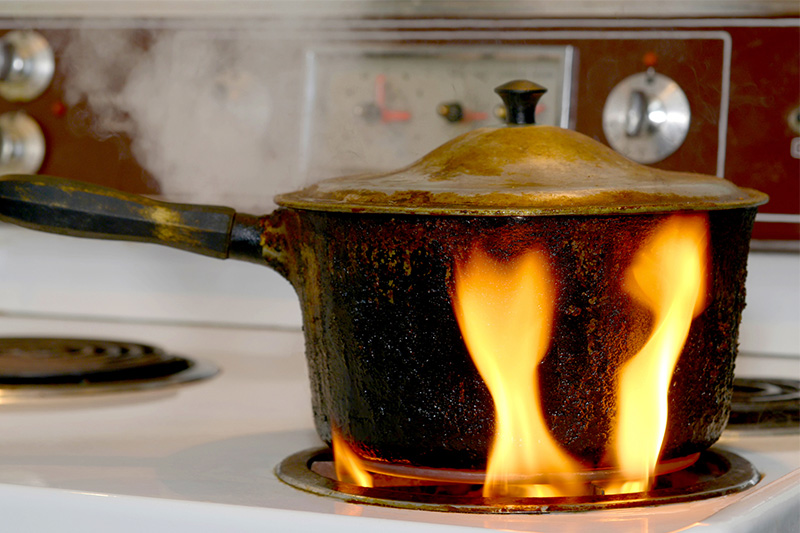
Picture a stockpot on the back burner of a busy restaurant kitchen. The cook sets it on low, walks away and gets buried in the dinner rush. For hours, it looks fine. There’s a little steam, and it smells great. Then somebody finally lifts the lid and finds a black crust welded to the bottom of the pot.
It didn’t scorch in a minute. It cooked down slowly, and nobody turned down the heat.
A lot of owners in the cleaning and restoration industry are that stockpot.
It usually starts with something good
You’re busy, and the phone keeps ringing. You add Saturday jobs. You take the 7 p.m. water loss call because that’s the business. Storm season runs long. A tech quits, and you jump back on the truckmount to cover. Paperwork slides to 10 o’clock at night, and lunch turns into gas station coffee while you pump gas.
None of that feels like burnout. It feels like hustle, and the adrenaline feels good.
Hustle has a finish line
Here’s how to tell the difference. Hustle has a finish line. Burnout doesn’t.
The busy season ends, and you still feel drained. A five-star review barely registers. A customer asks a simple question, and you want to throw your phone across the parking lot. That’s not a busy week. That’s the pot running low.
The warning signs tend to be quiet ones. You snap at your crew over small stuff. You dread jobs you used to enjoy. You keep telling yourself you’ll take a break “after this month,” and you’ve been saying that since March.
Your techs are on the same stove
Owners aren’t the only ones at risk. Think about the restoration tech who’s been on back-to-back mitigation jobs for three weeks straight, or the carpet cleaner running eight jobs a day in July. They won’t always tell you they’re cooked. Plenty of them will simply start looking for another job.
The research bears that out. A Gallup study of nearly 7,500 full-time employees found that people who feel burned out very often or always are 63% more likely to take a sick day and 2.6 times as likely to be actively seeking a different job. When good techs are this hard to find, losing one to burnout stings.
Here’s the upside. Because burnout builds slowly, you get a lot of chances to catch it. You don’t need a dramatic fix. You need to lift the lid more often.
Try this before next week
Block 15 minutes on your calendar. Write down every task you personally handled in the last seven days that someone else could have done. Pick one and hand it off for good.
After that, find one of your techs and ask a simple question: “How are you holding up?” Then actually listen to the answer.
Turning the heat down a little is how you start keeping burnout at bay.
Watch or listen to the episode below

Jeff Cross
Jeff Cross is the ISSA media director, with publications including Cleanfax, Cleaning & Maintenance Management, and ISSA Today, as well as multimedia programs such as Straight Talk! and Take 5 With Cleanfax in video and podcast format. He can be reached at [email protected].