The Restoration Pulse: Inspection and Monitoring—Quality vs. Quantity
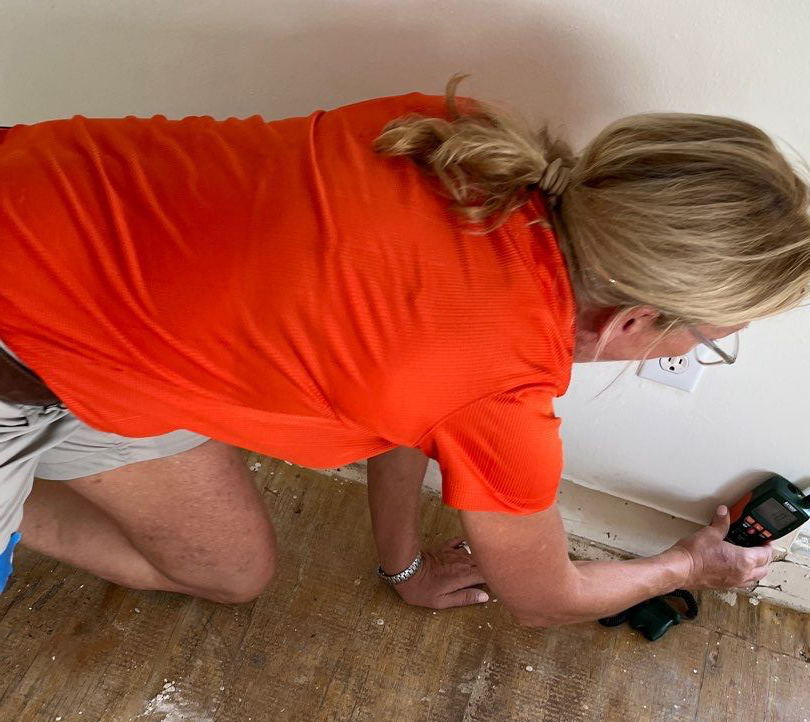
No shortage of data exists in water damage restoration. Technicians can collect dozens, even hundreds, of moisture readings during a single project. Modern meters, mobile documentation platforms, and carrier expectations have all pushed the industry toward more frequent measurement and more detailed job files. But more readings do not automatically mean better information.
The real question is not how many numbers appear in the drying log. The better question is whether those numbers were collected intentionally, consistently, and in a way that supports reliable drying decisions. Inspection and monitoring are not clerical exercises. They are decision-making systems. When the method is weak, a high volume of readings can create the illusion of control while leaving the restorer with very little useful information. When the method is strong, fewer targeted readings can tell a clearer story, support better production choices, and produce documentation that stands up to scrutiny.
Briefing: Why Measurement Method Matters
The restoration industry has steadily moved toward more formalized documentation of drying activity. The ANSI/IICRC S500 Standard for Professional Water Damage Restoration identifies project documentation, drying technology, inspections, evaluations, instruments, and structural restoration as core components of professional water damage restoration. In practice, that means restorers are expected to do more than place equipment and hope the structure dries. They must evaluate conditions, monitor progress, and document the basis for their decisions.
At the same time, the industry has become more dependent on digital job files, drying logs, moisture maps, and platform-driven checklists. These tools can improve consistency, but they can also encourage a quantity-first mindset. A technician may feel pressure to fill every field, capture every surface, or produce a large number of readings because the file looks more complete. Yet a reading without context has limited value. If the technician does not identify the material, the meter type, the measurement method, the location, the depth or setting used, the surrounding conditions, and the relationship of that reading to the drying goal, the number has little to no real value.
The restoration industry has steadily moved toward more formalized documentation of drying activity. The ANSI/IICRC S500 Standard for Professional Water Damage Restoration identifies project documentation, drying technology, inspections, evaluations, instruments, and structural restoration as core components of professional water damage restoration. In practice, that means restorers are expected to do more than place equipment and hope the structure dries. They must evaluate conditions, monitor progress, and document the basis for their decisions.
At the same time, the industry has become more dependent on digital job files, drying logs, moisture maps, and platform-driven checklists. These tools can improve consistency, but they can also encourage a quantity-first mindset. A technician may feel pressure to fill every field, capture every surface, or produce a large number of readings because the file looks more complete. Yet a reading without context has limited value. If the technician does not identify the material, the meter type, the measurement method, the location, the depth or setting used, the surrounding conditions, and the relationship of that reading to the drying goal, the number has little to no real value.
That is the heart of the quality versus quantity issue. Moisture inspection and monitoring should be designed to answer specific questions: What materials are affected? How far has moisture migrated? What is the dry standard? Is the drying system producing measurable progress? Are materials responding as expected? Do conditions justify continuing, modifying, or removing equipment? A pile of uncontrolled readings may not answer those questions. Worse yet, they can lead to inaccurate assumptions. A smaller set of well-chosen, repeatable readings will provide much higher clarity.
How It Impacts Restorers and Stakeholders
For restorers, poor measurement practices create operational risk. If daily monitoring is inconsistent, production managers cannot confidently determine whether equipment is properly sized, whether air movement should be adjusted, whether demolition is needed, or whether materials have reached an acceptable goal. Crews may spend extra time on monitoring visits without gaining useful information, or worse, they may make decisions based on readings that cannot be compared from day to day.
For property owners, weak monitoring can extend disruption. If the restorer cannot clearly explain what is wet, what is drying, and what has been verified as dry, the customer may lose confidence in the process. They may question why equipment remains in place, why materials are being removed, or why the job is not complete. Clear, methodical measurement gives the contractor a better way to communicate progress and reduce uncertainty.
For adjusters, consultants, and third-party reviewers, documentation quality often determines how easy it is to validate the scope and timeline. A drying log that contains scattered readings may invite questions. A drying log that ties readings to material type, room location, moisture map, equipment placement, psychrometric conditions, and dry standard gives reviewers a defensible chain of information. That can reduce back-and-forth, support legitimate charges, and help move the file toward payment.
The financial impact is real. Better inspection and monitoring can shorten monitoring visits, reduce unnecessary equipment days, support faster approvals, and strengthen collections. The goal is not to create a larger file. The goal is to create a smarter file.
Practical Ways Contractors Can Improve Measurement Quality
1. Start with a moisture map, not a random reading list. Before daily monitoring begins, define the affected areas, affected materials, unaffected control areas, and likely paths of moisture migration. A map does not need to be complicated, but it should make the monitoring strategy visible. The technician should know which points will be measured repeatedly and why those points matter.
2. Establish a defensible dry standard. Drying goals should be based at least in part on comparable unaffected materials, known as dry standards. Without drying goals, the team may know that readings are going down but still not know whether materials are dry enough to complete the job.
3. Record the variables that make readings meaningful. Moisture readings should be tied to the material, room, exact location, meter type, meter setting, depth or probe location, date, time, technician, and relevant environmental conditions. This context allows the same point to be measured consistently and allows others to interpret the data later.
4. Repeat key readings instead of chasing new ones. Daily monitoring should show change over time. That requires returning to the same meaningful points, not simply collecting new numbers in the same room. Repeated readings at defined locations create a trend line that can support decisions about equipment adjustments, material removal, containment changes, or project completion. This doesn’t mean that additional locations should not be checked at random; however, your log should record the consistent locations. If new areas are discovered that warrant repeat measurement, add them to the log with the same control for meter, location, material, etc.
5. Link readings to decisions. A drying log should not only show what was measured. It should explain what the team did with the information. If readings plateau, document the investigation and adjustment. If a material is removed, document why it was not responding or why it could not be dried in place. If equipment is removed, document the readings and conditions that justified that decision.
6. Train technicians on intent, not just tools. A technician who understands why a reading is being taken is more likely to take it correctly. Training should cover meter limitations, material differences, psychrometric relationships, moisture migration, documentation expectations, and how monitoring data affects billing, liability, and customer communication.
7. Audit job files for decision quality. Managers should review completed jobs and ask: Could another qualified person understand what was wet, how it was dried, when it reached dry standard, and why major decisions were made? If the answer is no, the documentation system needs improvement.
The Business Case for Better Monitoring
Intentional monitoring improves more than technical accuracy. It improves business performance. When measurement points are selected carefully and repeated consistently, technicians spend less time wandering through the structure looking for numbers to enter. Production managers get clearer information. Estimators and administrators have stronger support for equipment days, labor charges, and drying decisions. Customers receive better explanations. Reviewers receive a file that is easier to follow.
This does not mean contractors should take fewer readings to save time. It means every reading should earn its place in the file. A high-quality monitoring system balances coverage with purpose. It captures enough information to understand the loss, verify drying progress, and support the claim, while avoiding unnecessary data that adds noise without improving decisions.
In a competitive and increasingly scrutinized restoration environment, documentation is not just a compliance requirement. It is part of the contractor’s value proposition. The company that can explain its drying strategy with clear, methodical data is better positioned to defend its work, manage cycle time, and collect what it has earned.
Call to Action: Build a Monitoring Method, Not a Reading Habit
This month, restoration contractors should take a hard look at their inspection and monitoring process. Pull three recent water losses and review the drying documentation. Do the readings tell a coherent story? Are key materials and locations identified? Are the same points monitored over time? Is the dry standard documented? Are production decisions connected to the data?
If the answer is no, the solution is not simply to require more readings. The solution is to build a better method. Create a standard moisture mapping process. Define minimum documentation variables. Train technicians to measure with intent. Require notes that connect readings to decisions. Then audit files until the process becomes routine.
In restoration, quantity may fill the log, but quality drives the decision. The contractors who understand that difference will produce stronger drying outcomes, cleaner files, better conversations with stakeholders, and faster paths to payment.
From the Author
Need help with reviewing your documentation system? Reach out, and I’d love to audit some of your drying logs. I promise to be brutally honest! Shoot me an email at [email protected] if I can help!

Brandon Burton
Brandon Burton, a longtime industry advocate, trainer, and standards volunteer, brings more than 30 years of experience on the technical side of the restoration industry. He is an approved IICRC instructor and a published author in the field. Burton currently serves as chair of the ANSI/IICRC Standards Committee and vice chair of the ANSI/IICRC S500 Standard for Professional Water Damage Restoration.