Confronting Fabric Cleaning Issues Once and For All
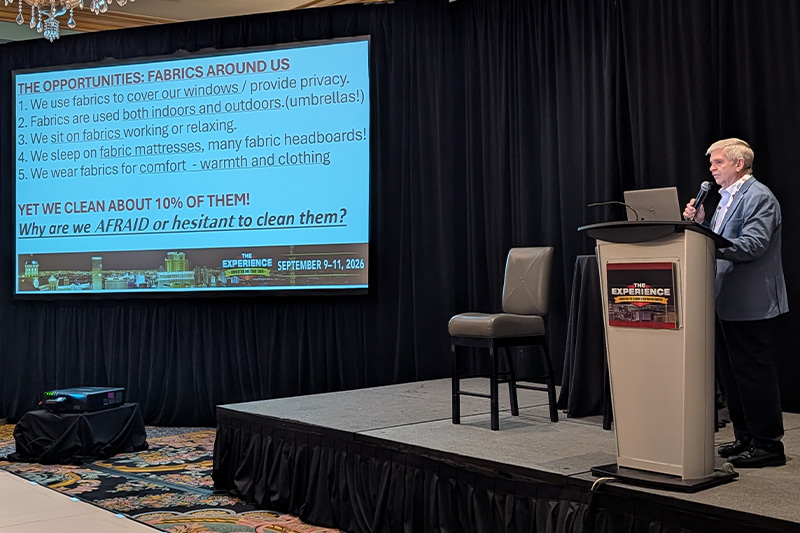
At last week’s Experience Convention and Trade Show in Las Vegas, Mark Exner, owner and founder of Restoration Training Services, encouraged attendees to trust their training. With so many fabric products in the world, he asked attendees why they were afraid to clean them.
“The fear is ridiculous,” said fellow trainer Thomas Cermak, who attended. “It stops everybody, and with the tools, technology and all the education we have today, it’s absolutely ridiculous to turn away 90% of the fabrics because of that.”
Exner challenged listeners to consider their clients’ indoor and outdoor fabrics, such as drapes, mattresses and patio furniture, and how often these items get cleaned and, in turn, the money cleaners are leaving behind. He also asked attendees how many had ever cleaned silk, and few raised their hands. He challenged attendees to try it and said, “The hardest one to do is the first one.”
Knowledge is confidence, Exner added. “Many cleaners are very intimidated by their surroundings when they go through the door of a very nice home, and they are intimidated it’s so expensive or appears to be,” he explained. “Some of these furnishings are in lower middle-class homes. Sometimes the fabrics are more delicate, but don’t look around in pain and get scared, because the customer picks that up. You need to be yourself, relax and trust your training.”
Fabric ID
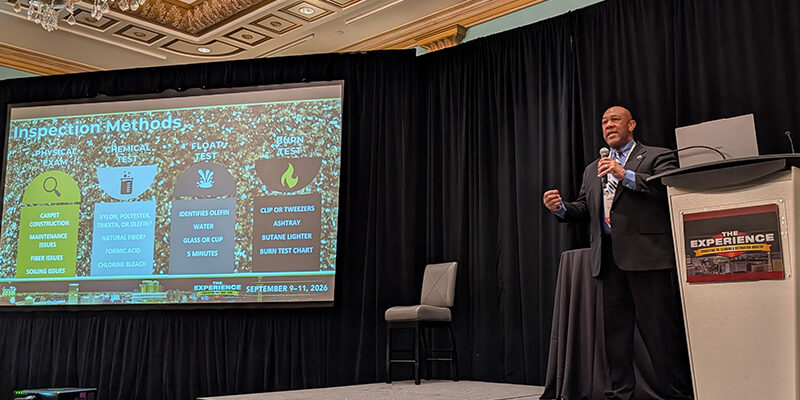
Fiber identification is essential, along with determining if the fabric is synthetic or natural. One way to do this is by performing a burn test and observing how the fabric behaves, looks and smells to determine the type. Exner said understanding how a burn test works also helps those with a language barrier, since the skill lies in observing the reactions, not in the language.
One key to figuring out what the fabric is made of is by examining the fabric on the back of a zipper, which many fabrics have. Cleaners can determine what the fabric is made from and test yarns individually.
Exner also recommended cleaners check the fabric ID labels. Each fiber, of course, has its own personality. “I like that name a little bit more than characteristic,” he explained. Just like people have personalities that favor certain foods over others, each fiber has particular likes and dislikes, he said.
“It’s easy to remember what a fabric likes and doesn’t when you work with it,” Exner explained. “You have to work with the fabric to accept and see if you can push the envelope enough to get it clean and the stains out.”
Exner also cautioned attendees to document pre-existing conditions, such as missing buttons, scratches and shrunken fabrics. Additionally, furniture is often reupholstered, and customers are misinformed about the fabric type.
Added value
Exner said he’s been lucky enough to have returning customers for at least 35 years by offering fabric cleaning as a valued service.
“Do your test,” he said. “Take your time. You must be able to perform a level of service the [where the] customer feels that they’ve gotten their money’s worth.”