
Restoration’s Biggest Opportunity May Come Before the Emergency

Restoration professionals are usually the ones who show up after disaster strikes, but the businesses and property owners who fare best in a crisis are the ones who started planning long before a loss ever occurred.
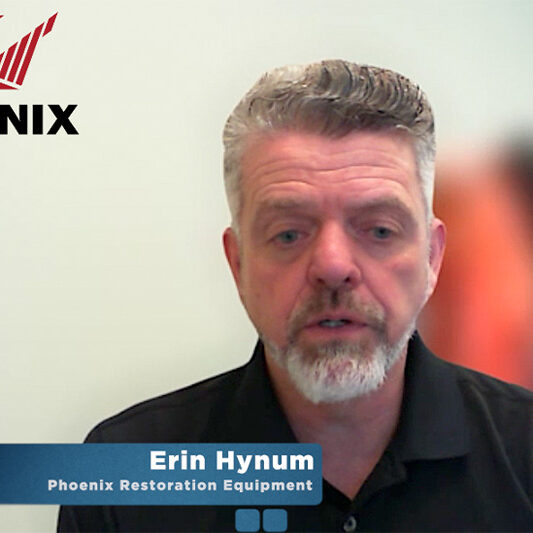
That’s the message from Chuck Lane, market director for security and emergency management with St. Francis Healthcare in Memphis, Tennessee, who spent 20 years in emergency management, including seven years inside the disaster restoration industry running training and development for a national firm. Since 2018, he has also worked as an instructor for FEMA at the Center for Domestic Preparedness in Alabama.
The one bad day syndrome
Lane said the biggest gap he sees on the client side is what he calls “one bad day syndrome.” Most disasters are high risk but low probability, the kind of event people read about happening to someone else. When it finally happens to them, the plans that should have been in place usually aren’t.
“The phone numbers weren’t in the book or in somebody’s cell phone. I don’t really know who to call, and it tends to spiral into a lot of other things,” Lane said.
Insurance is a common blind spot, he added. Many business owners don’t fully understand their coverage or who to call when a pipe bursts at 3 a.m. The person on site overnight may not have that answer either, and the longer water runs or smoke and soot sit, the worse the damage becomes.
On the restoration side, Lane said readiness comes down to whether crews, trucks, and equipment are staged and ready to move, and whether teams have practiced the basics. Under stress, he noted, fine motor skills and composure both suffer, so rehearsed routines matter more than ever.
A business continuity issue, not just an emergency one
Many organizations treat disaster preparedness as someone else’s job, handled by emergency management rather than built into business continuity planning. Lane said that’s understandable but shortsighted. Business owners juggle countless priorities, and without a visible return on investment, preparedness can slip.
He pointed out that public emergency responders are focused on life safety and community-wide infrastructure in the early days of a disaster, not on any single business, unless that business qualifies as critical infrastructure. That leaves the first few days largely up to the business owner and the vendors they call in to stabilize the situation.
The stakes go beyond one company’s bottom line. Lane cited the often-cited figure that roughly 40% of businesses that close during a disaster never reopen, a loss that ripples through employees, customers, and the surrounding community. He described a tornado that hit two businesses in his area; one reopened, the other didn’t, and the community absorbed the resulting job losses.
Lessons from the field
Complacency builds when nothing happens for a while, Lane said, describing it as “peace is kind of the enemy of memory.” Communities that see frequent floods or tornadoes tend to stay engaged with preparedness, while lower-frequency risks, like a major earthquake along the New Madrid fault, are easier to dismiss.
He compared emergency planning to everyday steps like carrying insurance or naming a beneficiary: nobody expects to need it, but having it in place brings peace of mind. Lane said a good emergency plan should be simple enough that anyone could follow it at 3 a.m., and that communication, knowing who to call before an event happens, is one of the most overlooked pieces of preparedness.
Where restoration contractors can lead
Lane sees three opportunities for the restoration industry to move beyond response and recovery into preparedness and education. The first is sharing real-world case studies with clients, striking a balance between examples dramatic enough to hold attention and relatable enough that people don’t dismiss them as a fluke.
The second is showing up prepared every time a job happens, since clients judge a contractor’s reliability by how well equipment is maintained and how clearly the crew communicates before, during, and after a loss.
The third is proactive mitigation work, such as offering site walks with clients, particularly those without a dedicated emergency planner, like long-term care facilities or small property management teams. Walking a site to identify utility shutoffs, review response plans, and explain risks like mold growth or smoke migration can prevent a manageable incident from becoming a major loss.
Dedicate the time
Asked for the single piece of advice he’d give facility managers, property owners, and business leaders, Lane didn’t hesitate.
“Dedicate the time to planning and education,” he said. “If you sit down, write a plan, educate people on that plan, and your team has a clear understanding of what they need to do, you’re in a lot better position than most organizations out there, simply because you’ve dedicated the time.”
Learn more about the Restoration Industry Association (RIA) here.
Watch the complete interview and listen to the podcast:

Jeff Cross
Jeff Cross is the ISSA media director, with publications that include Cleaning & Maintenance Management, ISSA Today, and Cleanfax magazines. He is the previous owner of a successful cleaning and restoration firm. He also works as a trainer and consultant for business owners, managers, and front-line technicians. He can be reached at [email protected].



 Loading ...