When Freedom Becomes a Cage
A quick search of the top reasons that entrepreneurs give for starting their own business consistently puts independence and autonomy at the top of the list. In other words, freedom.
Freedom to build something according to their own vision and values. Freedom from the constraints and outdated practices of an employer or boss. Freedom from the dissatisfaction of their current situation.
Rounding out the list are familiar themes: the pursuit of passion, the promise of financial potential, the hope for recognition and impact, and, of course, frustration with the status quo. All legitimate reasons. All very human.
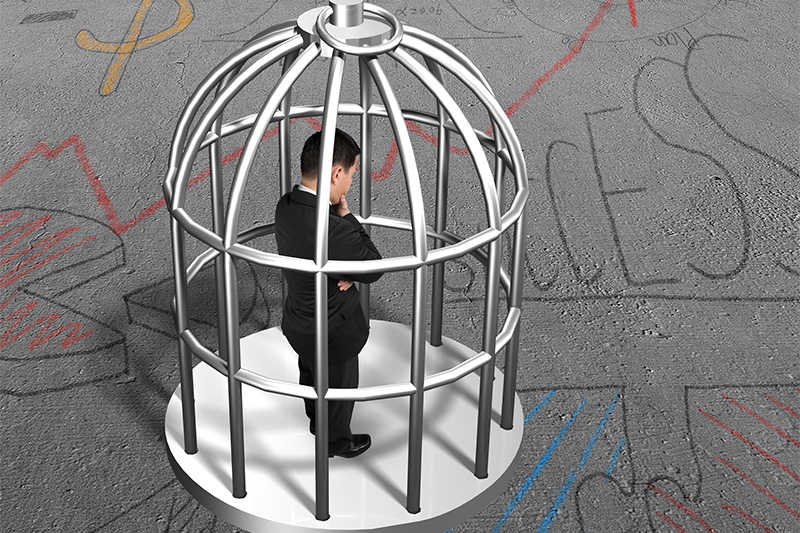
But somewhere along the journey, many business owners lose their way. The very freedom they set out to achieve becomes the thing that traps them. The businesses they built to liberate them begin to trap them.
When freedom turns into obligation
As they grow within their companies, it’s easy to become confined by the roles they believe they’re supposed to play and by those that others expect them to play.
For the owner, it can sound like, “I’m the boss. I’m supposed to have the answers. I can’t afford to be wrong.” A company’s growth often pulls the founder into responsibilities they never trained for and, frankly, don’t enjoy.
For those who work with them, it becomes, “That’s just the way they are.”
These perceptions—both internal and external—aren’t always harmful. But they can quietly build walls. And before long, those walls can start to feel like a cage. They started out chasing freedom and ended up fenced in by it.
The invisible walls we build
I’ve often asked: What freedoms have been given up along the way? Were there things they loved doing when the company was younger, leaner, and simpler? Maybe it was delivering the service themselves. Maybe it was selling. Maybe it was just the satisfaction of seeing their work make a difference.
And if they’re not doing these things anymore, why not? What’s stopping them?
We often imagine that being our own boss means freedom from constraints. But if we’re honest, most of us have just traded one boss for many—customers, employees, vendors, even the business itself—forgetting there’s a difference between freedom from something and freedom toward something.
Too often, our culture equates freedom with limitlessness—doing what we want, when we want, as long as we can afford it. We’re told to put ourselves first, to protect our “me time,” to chase whatever feels good in the moment.
But that kind of freedom, untethered from purpose, eventually feels hollow.
Rediscovering purpose as the path to freedom
True freedom isn’t indulgence; it’s alignment. It’s freedom from envy, comparison, and the constant churn of the Hedonic Treadmill that keeps people running toward “more” without ever feeling fulfilled or knowing why.
When a business starts to succeed and provide the material freedoms once dreamed of, such as financial security and flexibility, it’s worth asking: Are its owners freer than they were when they started? Or have they simply built a bigger, shinier cage?

Chuck Violand
Chuck Violand is the founder of Violand Management Associates (VMA), a highly respected consulting company in the restoration and cleaning industries. Through VMA, he works with business owners and companies to develop their people and profits. For more information, visit www.violand.com.